
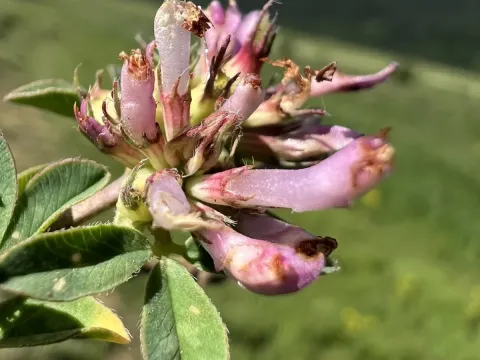
Velebit clover
Trifolium velebiticum
Sowing of Velebit clover is best performed in early spring when temperatures are low enough to break the natural dormancy of the seeds.
What the section contains
Velebit clover
The seeds require mechanical or chemical scarification to improve water absorption, as the testa is naturally hard and resistant to moisture.
The sowing depth should remain shallow, roughly 1 cm, allowing the small seedlings to reach the surface without exhausting internal energy reserves.
In terms of spacing, a density that allows for adequate airflow is crucial to reduce the risk of humidity-related pathogens in the canopy.
Early establishment is slow, so providing a clean seedbed free of aggressive grass species is a critical agronomic requirement for this variety.
Velebit clover is a perennial legume species primarily adapted to the unique climatic conditions of high-altitude karst landscapes.
The soil requirements focus on well-drained, nutrient-poor, yet lime-rich substrates, where the plant can compete effectively against less adapted species.
It thrives in environments with high diurnal temperature fluctuations, which are characteristic of its native habitat in the Velebit mountain range.
Regarding moisture, the plant is moderately drought-tolerant due to its extensive taproot system that reaches deep into rock fissures.
This crop is strictly cold-hardy, demonstrating significant physiological adaptations to survive prolonged snow cover and intense mountain winds.
The biomass yield of Velebit clover is generally lower than that of commercial clover species, reflecting its slow-growing alpine nature.
Nutritional value is high, as the foliage is rich in proteins and secondary metabolites that support livestock health in mountain pastures.
Seed production is highly variable and depends heavily on the presence of local pollinator populations throughout the flowering period.
Expected forage yields are best managed through rotational grazing rather than intensive mechanical harvesting to preserve the persistence of the stand.
Long-term yield stability is achieved when the clover is part of a diverse mountain pasture mix, utilizing the nitrogen-fixing capabilities of the plant.
Fungal diseases such as powdery mildew can become an issue if the crop is planted in areas with poor ventilation and stagnant air.
Specific pests like the clover seed chalcid represent a threat to reproductive success by damaging the developing seeds within the pods.
Heavy grazing pressure by wild or domestic herbivores can deplete the plant reserves if the recovery period is not strictly enforced.
Soil acidification over time may negatively impact the symbiotic relationship with nitrogen-fixing bacteria, reducing overall vigor.
Management of these threats relies on integrated pest management (IPM) techniques designed to favor the resilience of the local ecosystem.