

Reference · Crops
Vetch
Vicia L.
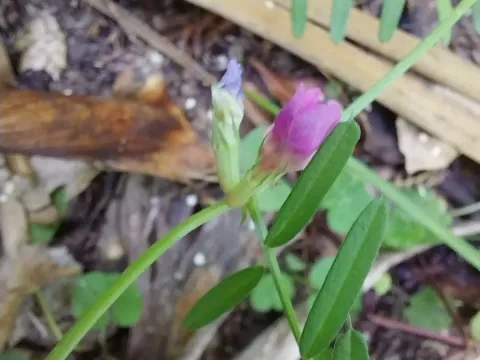
Common vetch (Vicia sativa) is an early-sowing crop. In temperate regions, seeding begins as soon as the soil is workable and has warmed to 4–5°C.
21
items
What the section contains
 Hairy tare
Vicia hirsuta (L.) Gray
2 products
Hairy tare
Vicia hirsuta (L.) Gray
2 products
 Bithynian vetch
Vicia bithynica (L.) L.
Bithynian vetch
Vicia bithynica (L.) L.
 Bitter vetch
Vicia ervilia (L.) Willd.
Bitter vetch
Vicia ervilia (L.) Willd.
 Bush vetch
Vicia sepium L.
Bush vetch
Vicia sepium L.
 Common vetch
Vicia sativa L.
Common vetch
Vicia sativa L. ssp. sativa
Common vetch
Vicia sativa L.
Common vetch
Vicia sativa L. ssp. sativa
 Faba bean
Vicia faba L.
Fava bean
Vicia faba L. var. major Harz
Faba bean
Vicia faba L.
Fava bean
Vicia faba L. var. major Harz
 Hairy vetch
Vicia villosa Roth
Hairy vetch
Vicia villosa Roth subsp. eriocarpa (Hausskn.) P. W. Ball
Horse bean
Vicia faba L. var. equina St.-Amans
Hairy vetch
Vicia villosa Roth
Hairy vetch
Vicia villosa Roth subsp. eriocarpa (Hausskn.) P. W. Ball
Horse bean
Vicia faba L. var. equina St.-Amans
 Hungarian vetch
Vicia pannonica Crantz
Hungarian vetch
Vicia pannonica Crantz
 Narbon vetch
Vicia narbonensis L.
Narrow-leaved vetch
Vicia sativa L. subsp. nigra (L.) Ehrh.
Narbon vetch
Vicia narbonensis L.
Narrow-leaved vetch
Vicia sativa L. subsp. nigra (L.) Ehrh.
 One-flowered vetch
Vicia articulata Hornem.
One-flowered vetch
Vicia articulata Hornem.
 Purple vetch
Vicia benghalensis L.
Purple vetch
Vicia benghalensis L.
 Slender tare
Vicia tetrasperma (L.) Schreb.
Small-seeded fava bean
Vicia faba L. var. minuta (hort. ex Alef.) Mansf.
Slender tare
Vicia tetrasperma (L.) Schreb.
Small-seeded fava bean
Vicia faba L. var. minuta (hort. ex Alef.) Mansf.
 Tufted vetch
Vicia cracca L.
Tufted vetch
Vicia cracca L. subsp. cracca
Tufted vetch
Vicia cracca L.
Tufted vetch
Vicia cracca L. subsp. cracca
 Yellow vetch
Vicia lutea L.
Yellow vetch
Vicia lutea L.
Marketplace
Products in this section · 12





Vetch
Early spring is considered the optimal time for spring varieties, as the crop is moisture-demanding. Early planting allows the plant to develop a deep root system before the summer heat arrives.
When grown as a cover crop or intermediate crop, summer or winter sowing (for winter varieties) is possible, ensuring significant biomass accumulation by autumn or the following spring.
Seeding depth depends on soil type, typically ranging from 3 to 5 centimeters. In heavy clay soils, seeds should be sown shallower, while deeper sowing is preferred in light sandy soils to ensure moisture contact.
Seeding rates vary depending on the method: higher for pure stands and reduced by 20–30% when sown in mixtures with grains (oats, barley) to optimize nutrient competition.
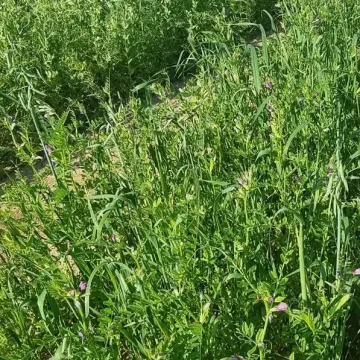
Vetch belongs to the Fabaceae family and is a valuable nitrogen-fixing legume. The plant adapts well to various environments but prefers fertile loam or sandy loam soils with neutral pH.
The crop is moderately cold-hardy but has high moisture requirements, especially during the flowering and pod-filling stages. Drought during these periods can significantly reduce yields.
Vetch performs poorly in acidic, waterlogged, or highly saline soils. An optimal pH range of 6.0 to 7.0 is required for effective nodule bacteria activity.
Inoculation with specific rhizobia bacteria is essential if the land has not been used for vetch previously, as it ensures efficient atmospheric nitrogen fixation.
The plant responds well to phosphorus and potassium fertilization, which strengthens root development and increases resistance to lodging, particularly important in humid climates.
The average yield of vetch green matter under favorable conditions ranges from 20 to 35 tons per hectare. On fertile soils with adequate moisture, this can be even higher.
Seed yields typically fluctuate between 1.5 and 2.5 tons per hectare. Since vetch is prone to lodging, planting it with a nurse crop is standard practice to maintain productivity.
Productivity is influenced by seed quality, agronomic practices, and effective weed control during the early growth phase, as vetch is a slow starter.
The crop has diverse applications, ranging from hay and haylage to green forage, grass meal, and high-quality green manure for improving soil structure.
High protein content in the aerial parts makes vetch an excellent forage source for cattle and sheep, providing a balanced diet during stall-feeding periods.
Common diseases affecting the crop include Ascochyta blight, rust, and root rot, which thrive under conditions of high humidity and dense canopy.
Major pests include nodule weevils, which damage roots and seedlings, as well as aphids, seed beetles, and pod borers that can cause significant damage to seed production.
Disease prevention involves proper crop rotation, the use of certified healthy seed, and chemical seed treatment to protect against soil-borne pathogens.
During the active growth stage, field monitoring is essential. If pest populations exceed economic thresholds, authorized systemic or contact insecticides are applied.
Early-stage weed management is a critical protective step because vetch develops slowly during the first month, making it vulnerable to competition for light and nutrients.
Harvesting for green forage is best performed at the onset of flowering, when protein and nutritional concentrations in the plant are at their peak.
For hay production, mowing should occur during the pod-filling phase, ensuring efficient drying to preserve leaves, which contain the majority of nutrients.
Seed harvesting requires caution as pods shatter easily. Direct or two-stage combine harvesting is optimal when approximately 75% of the pods have turned brown.
Post-harvest processing involves thorough cleaning and drying to a moisture content of 14–15% to ensure safe and long-term seed storage.
When used as a green manure, the crop should be incorporated into the soil during the flowering stage to maximize biomass before it develops tough, fibrous stems.