
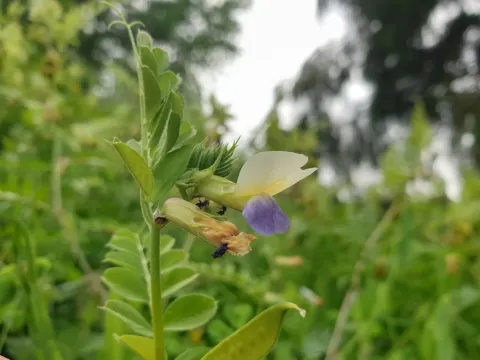
Vicia barbazitae
Vicia barbazitae
Vicia barbazitae is a member of the Fabaceae family, recognized for its potential as a high-quality forage crop. It is a herbaceous plant that thrives in various climatic conditions, contributing significantly to sustainable agricultural practices.
What the section contains
Vicia barbazitae
Sowing typically occurs in early spring, once soil temperatures reach 5–8 degrees Celsius. Proper timing is crucial to ensure early vigor and effective establishment of the crop before the onset of summer heat.
Seeding rates are adjusted based on soil quality and the intended end-use of the biomass. A row spacing of 15 cm is standard, facilitating optimal canopy closure and weed suppression.
Being a nitrogen-fixing legume, Vicia barbazitae contributes to soil health by enriching the substrate with nitrogen, which benefits subsequent crops in the rotation cycle.
The use of specific rhizobial inoculants during planting can enhance nodulation, leading to better plant performance and higher biomass accumulation throughout the growing season.
This crop prefers moderate climates and well-drained soils with a neutral pH. It is sensitive to excessive moisture, which can inhibit root respiration and promote the development of pathogenic fungi.
Sunlight is essential for Vicia barbazitae to achieve its maximum biomass yield. While it can tolerate partial shade, productivity is highest in fully exposed fields with good light penetration.
Nutrient management focuses on the availability of phosphorus and potassium. These elements are vital for the development of nodules and the structural integrity of the plant stems.
Climate adaptability is a key feature of the species, though it requires protection from severe frost if grown during the winter months in colder northern regions.
Water management is necessary during the early stages of development. Once established, the plant exhibits a moderate level of drought tolerance, though irrigation during flowering can significantly boost seed set.
The biomass yield of Vicia barbazitae is competitive with other common vetch species. It provides excellent quality forage when harvested at the appropriate developmental stage, typically at the onset of flowering.
Productivity is maximized when grown in mixtures with grasses, as this combination offers a balanced nutrient profile for livestock and improves the overall resilience of the pasture.
Seed production requires careful management of pollinator populations. In areas with high bee activity, seed yields are significantly higher compared to fields without dedicated pollinators.
Post-harvest handling is critical to maintaining the quality of the fodder. Rapid drying is necessary to prevent spoilage and ensure the retention of protein content for storage.
Economic value is derived from both hay production and the soil-improving properties, making Vicia barbazitae a versatile choice for mixed farming systems.
Disease pressure is primarily linked to fungal pathogens, such as rusts and mildews, which thrive in humid environments. Field sanitation and rotation are the best defense mechanisms.
Common insect pests include weevils and aphids. Aphids, in particular, can stunt growth by sap-feeding, so monitoring during the vegetative phase is essential for timely intervention.
Integrated pest management (IPM) strategies, including biological control and resistant cultivar selection, are recommended to minimize reliance on synthetic chemicals.
Weed management in the early stages is vital, as the seedlings of Vicia barbazitae are not highly competitive. Mechanical hoeing or targeted weeding provides the best results.
Preventive measures such as using certified seed and maintaining a balanced soil fertility profile go a long way in reducing the vulnerability of the crop to environmental stresses.