
Vicia argentea
Vicia argentea
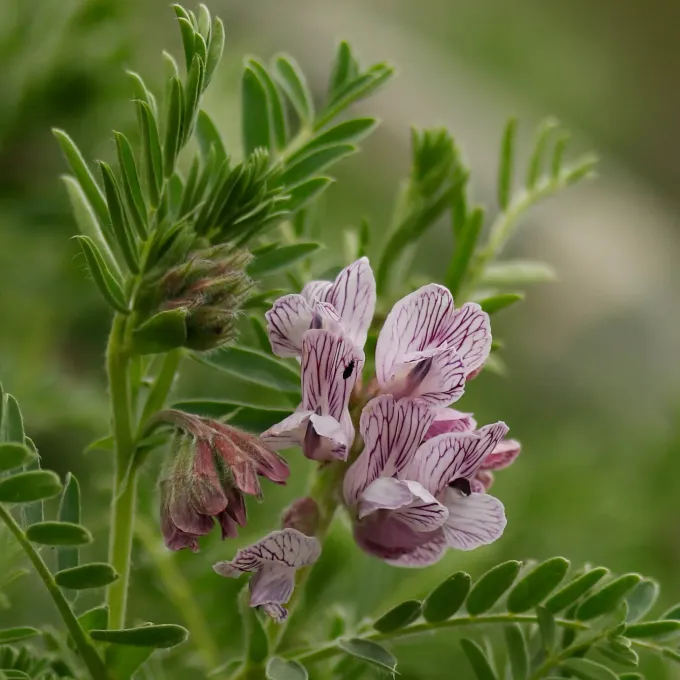
Description
Sowing dates
Vicia argentea, commonly known as silver vetch, is a perennial legume highly valued for its nitrogen-fixing capabilities and soil improvement properties.
The optimal sowing time is early spring, allowing the plant to establish its root system before the onset of summer heat. Adequate soil preparation is essential for successful germination.
Seeds should be sown at a depth of 2 to 4 centimeters. Using a standard drill with rows spaced 15–20 centimeters apart is the most common method for commercial production.
Due to slow initial growth, weed control during the seedling stage is critical. Early intervention ensures the crop can successfully compete for space and nutrients.
Seed treatment (scarification) may be necessary to improve the germination rate, especially if the seeds have been stored for extended periods prior to planting.
Growing requirements
Silver vetch thrives in well-drained, neutral, or slightly alkaline soils. It performs best in areas where the soil structure allows for deep root penetration.
The plant exhibits excellent drought tolerance, a trait attributed to its silvery hairs which reduce water loss through transpiration, making it suitable for arid regions.
Full sunlight is required for optimal photosynthesis and healthy growth. The plant does not perform well in shaded conditions or in waterlogged, heavy clay soils.
Regular maintenance involves soil aeration through row cultivation and the application of balanced phosphorus and potassium fertilizers to enhance overall crop vigor.
It is well-adapted to cooler temperate climates and is highly resilient to early autumn frosts, extending its growing season compared to many annual legumes.
Main diseases and pests
Fungal pathogens such as anthracnose and powdery mildew are the primary disease threats, particularly during periods of high humidity and poor field drainage.
Pests like weevils and aphids can cause damage to both foliage and root nodules, potentially reducing the overall nitrogen-fixing capacity of the crop.
Integrated pest management strategies, including crop rotation and field sanitation, are effective in preventing major outbreaks of common diseases and pests.
Crop protection measures should focus on the early detection of stress factors. Proper spacing helps improve air circulation, significantly lowering fungal pressure.
While chemical interventions are available, biological control agents and resistant cultivars are preferred in sustainable agricultural practices to maintain soil health.
Harvesting
For high-quality forage, the crop should be harvested during the flowering stage. At this phenological phase, the biomass provides the best nutritional balance for livestock.
Seed harvest requires careful timing; the pods should be monitored as they turn brown to avoid shattering. Mechanical harvesting must be handled gently to maintain seed integrity.
Post-harvest processing involves thorough drying of the seeds to reach a moisture content of 12–14%, which is critical for preventing fungal growth during storage.
Modern equipment settings must be adjusted to ensure minimal breakage. Cleaning the harvested seeds of all inert materials is necessary for market-grade quality.
Proper storage in a cool, dry environment ensures that the seed viability remains high for the next planting season, maximizing the return on investment.