
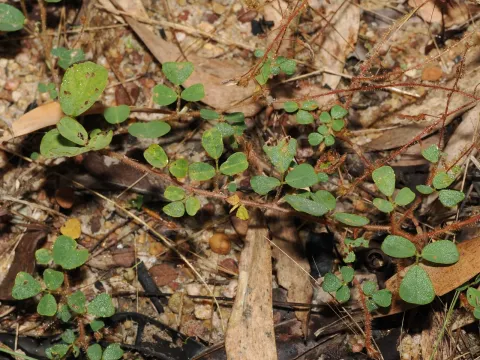
Desmodium trichostachyum
Desmodium trichostachyum
Desmodium trichostachyum is a perennial herbaceous plant belonging to the legume family (Fabaceae). This species is well-regarded for its role in sustainable agricultural systems due to its ability to fix nitrogen and improve soil fertility in diverse tropical environments.
What the section contains
Desmodium trichostachyum
The native range of this plant encompasses various Asian regions, where it has adapted to warm climates and varying levels of precipitation. It thrives in open field conditions, often integrated into pastoral systems or as a green manure cover crop to restore degraded land.
Regarding soil requirements, Desmodium trichostachyum prefers well-drained substrates that prevent waterlogging, which is a major limiting factor for its root health. It displays notable tolerance for acidic soils, allowing it to grow where more demanding forage crops might fail to establish.
Cultivation practices focus on establishing a dense stand to facilitate weed suppression. Due to its vigorous growth habit, it can produce significant amounts of biomass, which serves as a high-protein feed source for livestock and aids in protecting the soil surface from erosion.
The plant demonstrates a strong response to moderate temperature regimes and consistent light levels. In intercropping systems, it complements other forage grasses effectively, creating a balanced nutritional profile for livestock grazing or fodder harvesting.
Insect pests represent the primary biological threat to this species, with leaf-eating beetles and caterpillars being the most common. Regular field inspections are essential during the early stages of establishment to manage localized outbreaks before they impact biomass yield.
Fungal diseases, particularly leaf spots caused by various pathogens, may arise during periods of high humidity and rainfall. To mitigate these risks, agricultural management must emphasize maintaining proper spacing to ensure adequate airflow within the crop canopy.
Soil-borne pathogens, including root-knot nematodes, can hinder the plant's growth and nitrogen-fixing efficiency. Utilizing resistant varieties and implementing crop rotation strategies that break the cycle of nematode accumulation are critical for maintaining field health.
Viral infections transmitted by aphid or whitefly populations can cause systemic issues, including stunted growth and leaf deformation. Controlling vector populations near the fields and utilizing clean seed stock are vital components of a comprehensive phytosanitary approach.
Environmental stress, such as extreme salinity or prolonged drought, can leave the plants more susceptible to opportunistic secondary infections. Providing adequate soil nutrients and maintaining optimal soil structure helps the crop resist common biotic and abiotic stressors.