
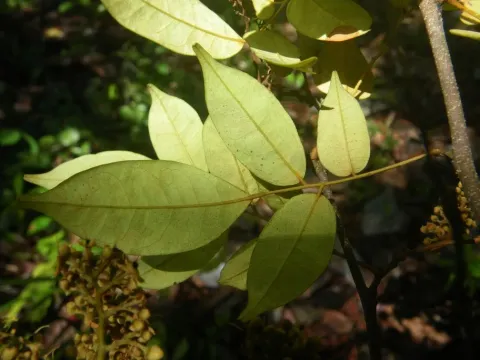
Dialium bipindense
Dialium bipindense
Dialium bipindense is primarily propagated through seeds, which should undergo scarification to overcome the natural dormancy of the hard seed coat and improve germination rates.
What the section contains
Dialium bipindense
The optimal time for planting is at the beginning of the rainy season, ensuring that the seedlings receive consistent moisture required for establishing a deep root system.
In nursery conditions, seedlings are typically grown in containers for 6 to 12 months before being transplanted to their final location in the field or plantation.
Proper spacing is essential to account for the mature tree's spreading canopy, allowing each specimen sufficient access to sunlight and nutrients from the soil.
Early maintenance involves weed control around the base of the saplings to eliminate competition for water and minerals during the tree's sensitive development phase.
Belonging to the Fabaceae family, this species thrives in humid tropical forest environments characterized by stable temperatures and substantial annual rainfall.
The plant requires deep, well-drained, and nutrient-rich soils. Loamy or red tropical soils with excellent aeration provide the best conditions for long-term health.
While the tree prefers full sun as it reaches maturity, young saplings often require partial shade to protect them from excessive heat and direct sunlight.
The soil must maintain a healthy balance of microbial life to support the nitrogen-fixing capabilities that are characteristic of many leguminous tropical species.
Mulching is a highly recommended agricultural practice to retain soil moisture during the dry periods, protecting the superficial root structure from dehydration.
The tree typically begins its reproductive stage between 5 and 8 years of age, producing clusters of edible fruits that are appreciated for their unique flavor profile.
The fruits contain a fleshy pulp that is widely utilized in local markets, providing a reliable source of vitamins and minerals for regional communities.
Beyond fruit production, the wood of Dialium bipindense is highly valued for its durability and resistance to rot, making it a significant asset in forestry and construction.
Harvesting strategies involve careful manual collection to prevent bruising the delicate outer skins of the fruit, ensuring better preservation and market value.
Sustainable management of the canopy through pruning can enhance annual fruit yields and promote better airflow, reducing the risk of pest infestation within the orchard.
The primary threats to the health of the tree include lepidopteran larvae and various sap-sucking insects that can compromise the vitality of leaves and young fruits.
Fungal root rot represents a significant danger in plantations with poor drainage, often exacerbated by persistent high humidity or stagnant surface water.
The encroachment of epiphytes and climbing vines can physically stress the tree, blocking sunlight and potentially hindering the tree’s overall growth potential.
Implementing integrated pest management (IPM) strategies is crucial to keep populations of harmful insects under control while maintaining the local ecological balance.
Regular monitoring of the canopy and trunk health is necessary to identify potential disease outbreaks early, allowing for timely intervention and preventative care.