
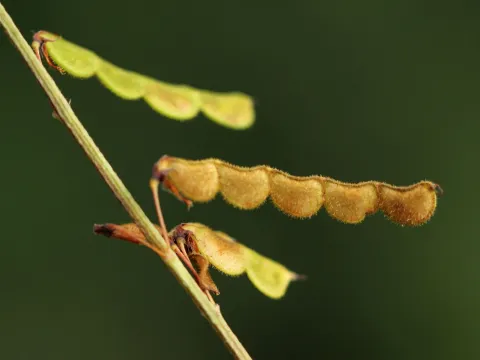
Desmodium ramosissimum
Desmodium ramosissimum
Desmodium ramosissimum is a resilient member of the Fabaceae family, well-regarded in tropical and subtropical agriculture for its nitrogen-fixing capabilities. For optimal establishment, seeds should be sown at the beginning of the rainy season when soil moisture levels are conducive to rapid germination.
What the section contains
Desmodium ramosissimum
Prior to planting, seed scarification is strongly recommended to break the physical dormancy of the seed coat, ensuring a uniform and vigorous emergence. The optimal soil temperature for sowing is approximately 20 to 25 degrees Celsius, allowing the seedlings to establish quickly before the onset of dry spells.
Seeds should be planted at a shallow depth of 2-3 centimeters to ensure efficient energy utilization during emergence. Whether using row seeding or broadcasting, maintaining a consistent density is crucial to allow the crop to shade the ground quickly and outcompete emerging weeds.
Inoculation with specific rhizobium strains is a vital agricultural practice that significantly boosts the plant's nitrogen-fixing efficiency. This natural process improves the nutritional quality of the forage and provides a sustainable nitrogen source for subsequent crops in a rotation.
Monitoring the field during the first six weeks post-emergence is essential to manage weed pressure. Proper cultivation management during this phase ensures the crop achieves canopy closure, which naturally suppresses weed growth and reduces the need for chemical intervention.
This crop thrives in well-drained soils, ranging from sandy loams to heavier clays, provided that waterlogging is avoided. Areas prone to prolonged saturation require the installation of adequate drainage systems to prevent root rot and ensure healthy plant development.
As a sun-loving plant, Desmodium ramosissimum achieves its peak biomass production in full solar exposure. Planting in shaded areas or under dense tree canopies will significantly reduce the vegetative yield and limit the plant's potential for nitrogen fixation.
The plant demonstrates excellent adaptation to subtropical climates and possesses a degree of drought tolerance once established. Its deep taproot system allows it to access water from deeper soil profiles, helping it survive short periods of water deficit.
Soil fertility requirements are relatively moderate, yet the application of phosphorus and potassium-based fertilizers can enhance early vegetative growth. Maintaining a soil pH within the neutral to slightly acidic range is optimal for root nodule activity and general health.
Integrating this crop into land rehabilitation programs is highly effective due to its ability to improve soil structure and organic matter content. Regular soil testing helps ensure that micronutrients remain available, supporting the robust metabolic processes of the legume.
The biomass yield of Desmodium ramosissimum is heavily influenced by the frequency of cuttings and the management of soil nutrition. Under favorable conditions, the crop is capable of sustaining multiple harvests throughout the growing season, providing a steady supply of fodder.
On average, producers can expect a dry matter yield ranging from 15 to 25 tons per hectare, depending on the site-specific climatic conditions and fertilizer management. High protein content in the foliage makes it a superior component in livestock rations, particularly for cattle and small ruminants.
When used as a green manure or cover crop, the plant contributes significant amounts of biomass to the soil surface and subsurface. This organic matter decomposition improves water retention and porosity in degraded agricultural soils over time.
Harvesting at the early flowering stage maximizes the balance between structural biomass and nutritional density. Delayed harvesting tends to increase the fiber content in the stems, which can lower the overall digestibility for livestock.
The long-term yield consistency relies on proper maintenance of the plant population density and avoiding over-grazing or excessive cutting. Adopting a rotational cutting system allows the plant to replenish its energy stores in the roots, ensuring sustained production.
Fungal diseases, particularly root and crown rots, pose the most significant threat during periods of excessive rainfall or poor field drainage. Implementing a diverse crop rotation is a primary defense strategy to prevent the buildup of soil-borne pathogens.
Pests such as aphids and various coleopteran larvae may cause localized damage to the stems and leaves. Regular field scouting is necessary to identify early infestations, allowing for targeted biological control methods that do not harm beneficial pollinators.
Seed-borne pathogens can reduce germination rates, highlighting the necessity of purchasing certified, disease-free seed and applying appropriate fungicides or biological seed treatments before planting.
Mechanical damage during harvest can create entry points for pathogens. Ensuring that mower blades are sharp and correctly adjusted for the appropriate cutting height prevents unnecessary wounding of the plants and facilitates faster regrowth.
Early-stage weed competition is a critical risk factor. If weeds are not managed during the initial establishment period, the slow-growing seedlings may be outcompeted, leading to sparse stands and potential crop failure in the affected patches.
Harvesting is typically performed using mechanical forage harvesters or mowers set at a height of 8–10 centimeters. Maintaining this stubble height is essential to protect the growing points of the plant, enabling quick regeneration of the forage.
For hay production, the material should be allowed to wilt in the field until moisture levels drop below 20 percent. This drying process must be carefully monitored to avoid shattering of the nutrient-rich leaves, which are the most valuable part of the forage.
Silage production requires effective chopping and thorough compaction to exclude oxygen from the biomass. This creates an anaerobic environment that promotes healthy lactic acid fermentation, ensuring the fodder remains stable during storage.
The timing of the harvest should be prioritized around the vegetative growth stages to ensure the highest protein content. Weather forecasts should be consulted, as rain during the drying process can significantly reduce the quality and market value of the harvested hay.
Post-harvest management often involves light fertilization to replenish nutrients extracted during the biomass removal. With proper care, a well-managed stand of this legume can remain productive for several years, offering long-term agricultural utility.