
Dialium
Dialium
Propagation of Dialium in natural and cultural settings is most commonly achieved through seed sowing. Seeds have a hard seed coat, therefore scarification before planting is recommended to accelerate germination.
What the section contains

Dialium
The optimal time for sowing seeds is the beginning of the rainy season, which provides seedlings with the necessary soil moisture levels for an active start to their root system development.
When grown in nurseries, seedlings are kept in containers with good drainage. It is important to provide them with shading in the first months of life to avoid overheating of young tissues under direct sunlight.
Transplanting to the permanent location is carried out when the seedlings reach a height of 30–50 cm, which usually occurs 6–12 months after sowing the seeds.
Vegetative propagation, including cuttings, is used less frequently due to low survival rates; however, it allows for the preservation of parental traits, which is important for commercial orchards.
Dialium belongs to the Fabaceae family and is a tropical tree demanding specific temperature conditions. The crop cannot tolerate even brief frosts and prefers average annual temperatures in the range of 22–30 degrees Celsius.
The tree needs deep, fertile, and well-drained soils. Although the plant can adapt to various soil types, it performs best on loams with a neutral or slightly acidic pH level.
Stable rainfall is necessary for normal growth. In regions with a pronounced dry season, organized regular irrigation is mandatory, as long-term water stress significantly reduces growth rates and fruit yield.
The crop is light-loving, so when planting, open areas should be chosen to exclude shading by other tall trees. Planting density should allow for free air circulation between the crowns.
An important factor is protection from strong winds, which can damage the fragile branches of young trees and lead to premature dropping of flowers or immature fruits.
The yield of Dialium depends directly on the age of the tree and growing conditions. The first harvest usually occurs in the 6th to 10th year of the tree's life, making the crop a long-term investment project.
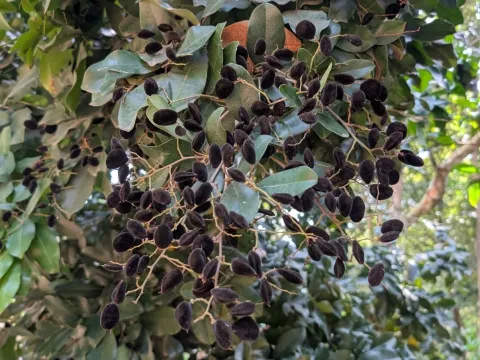
A mature tree is capable of producing significant volumes of fruit, known as "velvet tamarind". The fruits are small, round legumes with a thin, velvety skin of dark or black-brown color.
Inside the fruit, there is edible pulp, which has a sweet-and-sour taste and high nutritional value. The pulp surrounds the seed and is highly valued as a food product in regions where it grows.
To increase yield, crown pruning is recommended to stimulate the formation of new fruit-bearing branches and improve the illumination of the inner parts of the tree.
Economic use includes consuming fruits fresh, making drinks, candies, and use in traditional medicine due to high levels of vitamin C and antioxidants.
Dialium is susceptible to attacks by various insect pests, with weevils and fruit borers being the most dangerous, damaging seeds and pulp inside the fruits during the ripening stage.
With high air humidity and poor crown aeration, fungal diseases such as anthracnose may develop, appearing as dark spots on leaves and young shoots.
Root rot can become a serious issue in areas with waterlogging. Therefore, it is critical to ensure high-quality soil drainage when preparing the planting site.
Typical threats to foliage include leaf-eating caterpillars, which during mass outbreaks can significantly weaken the tree, reducing its photosynthetic activity.
Control measures include regular monitoring of the plantations, the use of bio-insecticides, and timely removal of affected plant parts to prevent the spread of infection throughout the orchard.
The harvesting of Dialium is carried out manually once the fruits reach full physiological maturity, when the skin acquires a characteristic dark shade and becomes brittle.
It is important to prevent over-ripening on the tree, as this can lead to fruit shedding and spoilage due to contact with damp soil, reducing market value.
After harvesting, the fruits require careful handling, as the velvety shell is easily damaged, which opens the way for mold penetration during storage.
The harvested crop is sorted by size and shell integrity, then sent for drying in well-ventilated rooms for long-term storage.
Traditionally, the fruits can be stored for several months without significant loss of pulp quality, which facilitates transportation and subsequent processing into various food products.