
Parkia
Parkia
Parkia is a genus of tropical trees belonging to the Fabaceae family, propagated primarily through seeds. Sowing is best initiated at the onset of the rainy season to provide young seedlings with sufficient moisture for root establishment.
What the section contains


Parkia
Before sowing, the tough seed coat often requires scarification or soaking to enhance germination rates. In commercial nurseries, seeds are sown in nutrient-rich media, where seedlings remain until they reach a height of 30–50 cm.
Transplanting to the permanent site occurs once stable warm weather is established. It is crucial to follow spacing guidelines based on the specific species, such as Parkia biglobosa, which can grow into large, sprawling trees.
Young plants are highly sensitive to direct sunlight in their early stages, necessitating shade provision. The application of organic fertilizers during plantation establishment significantly boosts wood growth rates.
Site selection must ensure good drainage, as the root system of Parkia is prone to decay if subjected to waterlogging in heavy, saturated soils.
As a quintessential tropical flora, Parkia requires high humidity and consistently high temperatures throughout the year. The optimal temperature range for healthy development is between +25 and +32 degrees Celsius.
The tree prefers deep, well-aerated loamy or sandy soils with a neutral to slightly acidic pH. It performs poorly in saline soils and areas with high water tables, which can lead to root system health issues.
For active fruiting, the tree requires adequate sunlight, though light lateral shading is tolerated during early development. The species is highly sensitive to abrupt temperature fluctuations and cold, drying winds.
In regions with distinct dry seasons, Parkia exhibits adaptive features such as leaf shedding to conserve moisture. However, consistent supplemental irrigation is vital during critical flowering phases to ensure a stable yield.
Pollination success depends on specific pollinators, as Parkia flowers have a unique structure and are often pollinated by bats or specialized bee species.
The productivity of Parkia depends heavily on the age of the tree and local growing conditions. Initial significant fruit production typically occurs 5–7 years after transplanting.
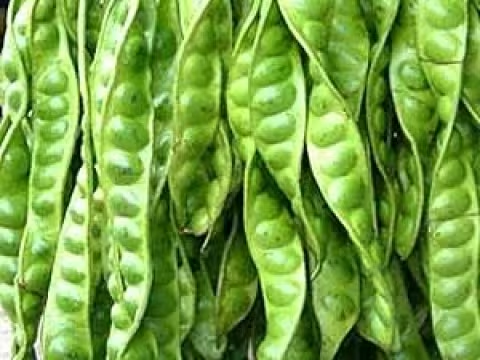
The harvest consists of long pods gathered in dense clusters. A single mature tree can yield hundreds of pods, making it an economically significant crop in local agroforestry systems.
The seeds, encased in a mealy pulp within the pods, are the primary commercial product. They are highly valued for their nutritional profile, rich in proteins, fats, and vitamins, which are sought after in the food industry.
Regular crown maintenance and pruning help form the tree structure and improve access to fruiting branches, which simplifies harvest and minimizes damage to the pods.
Consistent commercial yields are achieved over several decades, as the tree is long-lived and capable of producing annual harvests with proper management.
Insect pests that target inflorescences and developing fruit are the primary threat to Parkia. Larvae of certain weevil species can destroy a significant portion of the potential crop during the flowering stage.
Fungal diseases, including anthracnose and root rot, emerge when agronomic practices are neglected, specifically through over-irrigation. Symptoms include leaf yellowing and dieback of young shoots.
Physical damage to the bark by rodents or large animals facilitates the entry of bacterial infections. Timely treatment of wounds with protective horticultural sealants is essential to maintain tree health.
Parasitic plants like mistletoe may establish themselves in the canopy, competing for nutrients with the host tree. Regular manual removal of epiphytes is a necessary maintenance procedure.
- Implementation of strict quarantine measures for imported plant material.
- Preventive spraying with biopesticides during peak flowering periods.
- Maintaining optimal planting density to improve canopy airflow.
Harvesting Parkia requires care to prevent pod breakage, as they can be brittle. Harvesting is traditionally performed manually using ladders or specialized long-reach tools equipped with hooks.
The signal to begin harvesting is the color change of the pods to a variety-specific hue and the partial drying of the peduncle. It is critical to finish the harvest before the heavy rains return to prevent spoilage of the seeds.
After collection, the pods are sorted; some pulp is consumed fresh, while seeds undergo further processing. Traditional methods involve seed fermentation, which neutralizes their strong odor and prepares them for culinary seasoning use.
Post-harvest processing includes drying the seeds in the sun to reach a specific moisture level, which is essential for ensuring long-term storage and preventing mold growth during transport.
For storage, seeds should be kept in cool, dry areas using breathable sacks to ensure air circulation. Properly processed seeds retain their nutritional quality throughout the entire off-season.