
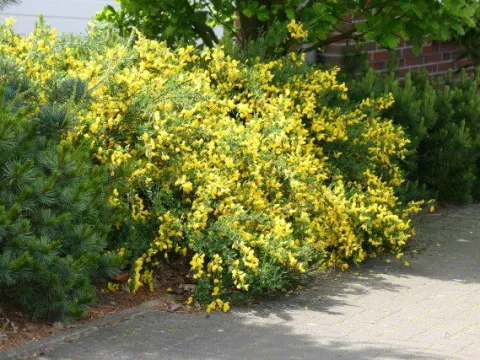
Kew Broom
Cytisus kewensis
Kew Broom (Cytisus kewensis) is a prostrate, deciduous shrub that belongs to the Fabaceae family. This hybrid cultivar is prized in horticulture for its cascading habit and an abundance of cream-colored flowers that bloom in the spring.
What the section contains
Kew Broom
This plant thrives in full sun exposure. It requires at least six hours of direct sunlight daily to maintain its compact form and to ensure a prolific flowering cycle. Insufficient light levels often lead to sparse foliage and weak, elongated stems.
The soil requirements are strict: Kew Broom needs well-drained, sandy, or stony soil. It performs poorly in heavy clay or waterlogged conditions, which can lead to rapid root rot and systemic plant failure shortly after planting.
The species shows moderate hardiness and prefers climates with mild winters. In regions prone to hard frosts, it is highly recommended to provide winter mulch around the base and cover the plant with breathable material to protect the young branches.
Regarding maintenance, the plant requires very little fertilizer. In fact, over-fertilizing can negatively impact the blooming process. Light pruning immediately after flowering is the best practice to encourage new growth and maintain the desired shape.
Kew Broom is susceptible to various fungal pathogens, particularly in humid environments. Powdery mildew is a common issue that manifests as a dusty white substance on the leaves, especially when air circulation around the shrub is inadequate.
Pests such as aphids and spider mites can infest the soft tissues of new growth. These insects sap the energy from the plant and can cause leaves to curl and discolor, eventually leading to a stunted growth habit.
The Broom Moth is another significant threat, as its larvae can cause substantial defoliation if left unchecked. Regular visual inspections are necessary during the spring months to identify early-stage infestations.
Proper sanitation is the first line of defense against these threats. Removing fallen leaves and infected branches reduces the overwintering potential for fungal spores and insect eggs, thereby protecting the plant's long-term health.
In cases of severe infestation or infection, chemical intervention using horticultural oils or systemic fungicides may be necessary. Always ensure that the treatment is applied during optimal weather conditions to maximize efficacy.