
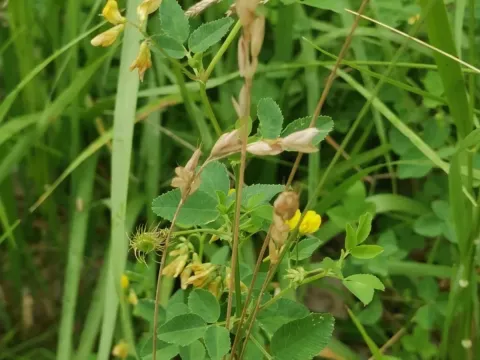
Karst alfalfa
Medicago carstiensis
Karst alfalfa is a perennial herbaceous plant belonging to the Fabaceae family. It is known for its ability to thrive in specialized geological conditions, making it an interesting subject for forage crop studies.
What the section contains
Karst alfalfa
Sowing should ideally take place in early spring once the soil temperature consistently reaches 6 to 8 degrees Celsius. This timing maximizes the plant's ability to capitalize on stored soil moisture for rapid germination.
The recommended seeding depth is between 1 and 2 centimeters, depending on the soil texture. Proper depth control is essential to ensure that the small seeds do not dry out before reaching established soil moisture.
A seeding rate of 12–15 kilograms per hectare is typically sufficient for pure stands. Using scarified, certified seeds is a key practice to improve field emergence and ensure a uniform crop stand.
The culture performs well when established under a cover crop, such as early-maturing grains, in regions with adequate rainfall. This method provides initial protection for the developing legume seedlings.
This species is well-adapted to moderate climates and shows significant resilience against drought. Its native range often includes rocky or calciferous soils, reflecting its high tolerance for alkaline conditions.
The ideal soil for this plant is well-drained, porous, and lime-rich. Waterlogging must be avoided at all costs, as the roots are highly susceptible to decay in oxygen-deprived environments.
With a deep-reaching root system, the plant is excellent at scavenging minerals and stabilizing soils in challenging terrains. This feature also helps in improving the physical structure of the soil profile.
Adequate sunlight is mandatory for optimal photosynthesis and the proper functioning of nitrogen-fixing nodules. Shaded areas lead to spindly growth and a decrease in the nutritional quality of the forage.
Soil fertility management should focus on phosphorus and potassium levels, which are critical for root health and cold tolerance. Nitrogen application is generally unnecessary due to the plant's symbiotic relationship with bacteria.
Root rots and anthracnose are among the primary fungal diseases that can afflict the crop. These are most common in regions with high humidity or poor soil drainage, necessitating careful site selection.
Insect pests, including alfalfa weevils, pose a constant threat to foliage and overall productivity. Integrated pest management strategies, such as timely harvesting, can often mitigate the need for chemical intervention.
Phytonomus species may cause damage to the buds and leaves, significantly reducing the biomass yield. Monitoring population spikes during the spring months is vital for effective crop protection.
Stunting and loss of stand density can occur if the field is not monitored for parasitic fungi. Maintaining a healthy stand through appropriate cutting intervals prevents these pathogens from gaining a foothold.
Good agricultural practices, such as choosing resistant genotypes and preventing mechanical damage to the crowns, remain the best defense against major threats. Strong, well-nourished plants exhibit natural resilience.