
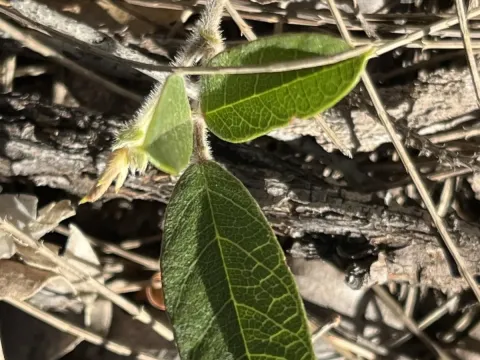
Kennedia
Kennedia Vent.
Seeds of Kennedia should be sown in spring when the soil has sufficiently warmed up. To improve germination rates, it is recommended to scarify the seeds or soak them in warm water for 24 hours prior to planting to soften the tough coat.
What the section contains

Kennedia
A well-draining, lightweight potting mix is essential for starting seeds. Sow the seeds at a depth of approximately 1 cm, ensuring that the soil remains consistently moist but not waterlogged throughout the germination process.
Maintain an ambient temperature between 20°C and 25°C to promote steady growth. Once the seedlings develop their first true leaves, they should be carefully transplanted into individual pots to avoid root competition.
It is crucial to handle the root system with care during transplantation, as Kennedia is known to be sensitive to root disturbances. Gradual acclimatization to outdoor conditions is necessary before final planting.
Ensure that the planting site has been properly prepared with organic matter to support the rapid development of the young vines once they are established outdoors.
Kennedia is a member of the Fabaceae family, native to Australia. It thrives in sunny environments where it can receive ample light, which is critical for its vigorous climbing habit and prolific flowering.
The ideal soil for this culture is fertile, sandy loam with a neutral to slightly acidic pH level. Excellent drainage is non-negotiable, as the plant is susceptible to root rot if water remains trapped around the root zone.
Regular watering is required during the active growing season, especially during hot, dry spells. However, the soil surface should be allowed to dry slightly between watering sessions to maintain healthy oxygen levels in the substrate.
As a climbing plant, Kennedia requires robust structural support. Trellises, wire meshes, or sturdy fences should be installed early to allow the stems to twine properly and achieve optimal canopy exposure.
Climate considerations are vital, as most species are not frost-hardy. In temperate climates, they are best grown as greenhouse plants or treated as annuals if they cannot be overwintered in a frost-free environment.
Common pests affecting Kennedia include aphids and spider mites, which can cause significant damage to tender foliage. These pests thrive in dry environments or greenhouses with poor air circulation.
Fungal diseases like powdery mildew are common in humid conditions with inadequate ventilation. If left untreated, these infections can rapidly spread across the vines, leading to foliage drop and loss of vigor.
Effective management involves consistent monitoring of the plant’s health. Early intervention with biological control methods or selective pesticides is recommended to keep pest populations under control.
Cultural practices, such as pruning damaged stems and maintaining adequate space between individual plants, are essential for disease prevention and ensuring the long-term health of the crop.
- Regular inspection of the undersides of leaves.
- Ensuring good airflow around the climbing structure.
- Applying preventative fungicides if seasonal conditions are damp.