
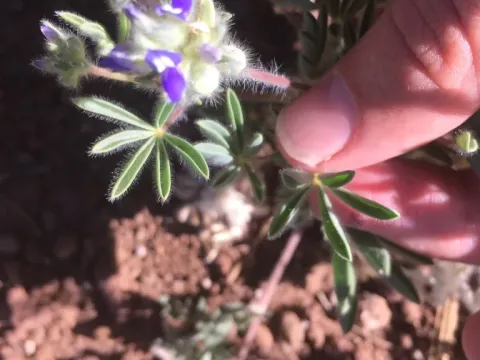
King's lupine
Lupinus kingii
Lupinus kingii, commonly known as King's lupine, belongs to the Fabaceae family and is native to the western regions of the United States.
What the section contains
King's lupine
Sowing typically occurs in the early spring, ensuring that the seeds are placed in soil that has reached a stable temperature for germination.
The seeds possess a hard seed coat, and natural dormancy is often broken through seasonal temperature fluctuations or artificial scarification methods.
Proper spacing is essential, as the plants require adequate air circulation to prevent the buildup of moisture in the lower canopy.
Seeds should be planted at a shallow depth, usually around 2–3 cm, to ensure the seedling can emerge successfully without exhausting its energy reserves.
King's lupine thrives in well-drained, sandy, or rocky soils, reflecting its natural habitat in mountainous and high-desert landscapes.
The species is highly drought-tolerant, capable of surviving in environments where water availability is limited for long periods of the year.
High levels of solar radiation are necessary for the plant to achieve its full potential, as it competes poorly in shaded environments.
Soil pH should ideally be neutral or slightly acidic; alkaline soils may lead to iron chlorosis, which can limit photosynthetic efficiency.
Nutrient requirements are relatively low, as the plant is adapted to nutrient-poor soils and relies on nitrogen fixation to meet its own needs.
While primarily recognized for ecological restoration, the biomass yield of Lupinus kingii is influenced by the density of the initial stand.
The plant produces significant nitrogen-rich organic matter, which can improve soil structure and fertility for subsequent crops in a rotation.
Seed production is moderate compared to commercial agricultural varieties, as the plant invests energy into long-term survival strategies.
Harvesting for forage must be done carefully to ensure the stand remains productive and is not depleted by over-grazing or excessive cutting.
Evaluation of yield in wild lupine species often focuses on the total amount of nitrogen added to the soil profile rather than just dry matter tonnage.
Common threats include fungal pathogens such as powdery mildew and various types of root rot that thrive in humid or poorly drained conditions.
Insects like aphids and seed weevils can cause substantial damage to the developing flowers and pod structures, affecting overall seed set.
Management of these threats involves crop rotation strategies and ensuring that the soil drainage is optimized before the growing season starts.
During the flowering stage, the plant is particularly susceptible to certain viral infections transmitted by insect vectors in the environment.
Limiting the introduction of non-native pathogens is a key component in maintaining the health of wild-type legume patches in agricultural plots.