
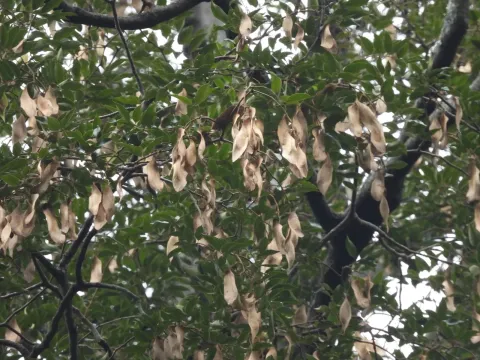
Koompassia malaccensis
Koompassia malaccensis
Koompassia malaccensis, commonly known as Kempas, is a massive tree species belonging to the Fabaceae family. It stands as one of the most prominent canopy giants in the tropical rainforests of Southeast Asia.
What the section contains
Koompassia malaccensis
The species requires a high-rainfall, tropical climate to thrive. It is typically found in lowland dipterocarp forests, where the humidity remains consistently high throughout the year.
Regarding soil preferences, it favors deep, well-drained alluvial or clay soils. Proper soil aeration is crucial for the healthy development of its extensive and robust root system.
The natural range of the species encompasses Peninsular Malaysia, Sumatra, and Borneo. These regions provide the warm, stable thermal environment necessary for its physiological processes.
Botany-wise, the tree is characterized by its smooth, grey-to-brown bark and large, buttressed base, which provides structural stability in deep, soft tropical forest soils.
The timber obtained from this species, marketed as Kempas, is highly valued in the international wood industry due to its superior density and mechanical strength properties.
Kempas wood is predominantly used in the manufacturing of durable flooring, heavy-duty construction components, and fine carpentry projects that require extreme wear resistance.
Processing this timber requires professional kiln-drying techniques. The wood is known to be refractory, meaning it can be prone to checking and warping if the drying process is not carefully controlled.
Due to its high tannin content, the wood reacts with iron under moist conditions, often resulting in chemical staining; therefore, stainless steel fasteners are recommended for construction.
Sustainable harvesting is a critical aspect of managing Koompassia malaccensis, as the species is increasingly targeted for conservation efforts to prevent habitat loss and ensure future availability.