
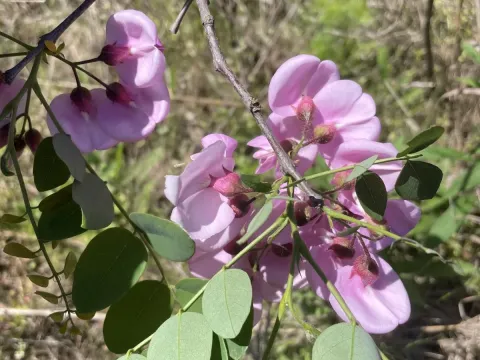
Kelsey locust
Robinia kelseyi
Kelsey locust (Robinia kelseyi) is a deciduous shrub or small tree belonging to the Fabaceae family. This species is native to the southeastern United States, naturally occurring in temperate forest margins and rocky outcrops.
What the section contains
Kelsey locust
Botanically, the plant is recognized by its pinnate leaves and striking racemes of pink, pea-like flowers that bloom in late spring. A distinctive feature is the presence of glandular hairs on the young twigs, which give them a sticky texture.
The culture thrives best in full sun to partial shade, requiring well-drained soil to prevent root issues. It is adaptable to various soil types but performs optimally in loamy or sandy soils that are rich in organic matter.
In terms of climate requirements, this species prefers temperate zones with moderate rainfall. It is not highly drought-tolerant when young and requires supplemental watering during the first growing seasons to establish a robust root system.
Horticulturally, Kelsey locust is highly valued as an ornamental specimen in landscaping. Its vibrant spring color and graceful habit make it a popular choice for residential gardens, border plantings, and park beautification projects.
Like many members of the Fabaceae family, the Kelsey locust can be susceptible to powdery mildew, especially in humid or poorly ventilated environments where air circulation is restricted.
Common insect pests include aphids and various types of leaf-chewing beetles, which can detract from the plant's aesthetic value if left unmanaged throughout the spring and summer months.
To maintain plant health, it is essential to practice regular pruning to remove dead or diseased branches, which helps prevent the spread of fungal pathogens and improves overall structure.
Integrated pest management strategies should be applied at the first signs of infestation, using targeted insecticidal soaps or horticultural oils to protect beneficial insects while controlling pests.
Site selection is a primary preventative measure; avoiding areas prone to waterlogging significantly reduces the likelihood of root diseases that can compromise the long-term vitality of the shrub.