
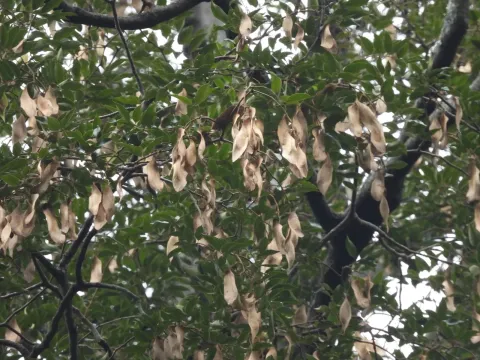
Koompassia
Koompassia
Koompassia is a genus of giant tropical trees belonging to the Fabaceae family. These trees are among the tallest inhabitants of Southeast Asian rainforests, reaching heights exceeding 60–80 meters.
What the section contains

Koompassia
The natural range includes Malaysia, Indonesia, Brunei, and the Philippines. The plants thrive in humid tropical lowland forests where stable high temperatures and abundant year-round rainfall prevail.
Successful growth of Koompassia requires deep, well-drained alluvial soils. The tree is highly sensitive to waterlogging and cannot tolerate prolonged water stagnation in the root zone, despite the tropical environment.
In their natural habitat, these trees develop a massive root system that provides stability during severe winds. Koompassia is considered a slow-growing species, meaning natural population regeneration is extremely slow.
Agronomic practices for cultivating Koompassia on an industrial scale are limited due to the complexity of propagation and specific requirements for the forest microclimate. Exploitation is primarily based on natural forest stands.
The main product is high-value timber, known on the international market by the trade name "Kempas." It is characterized by high density, strength, and a distinctive reddish-brown color.
Koompassia wood is widely used in the production of parquet flooring, structural components, railway sleepers, and decorative items. The material is highly valued for its resistance to mechanical stress.
Due to high demand and the slow growth rate of the trees, timber harvesting is strictly regulated by international certification bodies to prevent the complete depletion of the species.
The economic efficiency of using this crop depends on the quality of the trunk, the absence of internal voids, and defects caused by insect activity or fungal infections during the tree's lifespan.
Secondary uses include the extraction of resins and applications in traditional medicine, although these areas are not dominant compared to the timber industry.
The primary biological threats to the wood are termites, which can rapidly destroy the structural integrity of the material. Additionally, the tree is susceptible to attacks by wood-boring insects (xylophages).
In forest ecosystems, Koompassia can suffer from fungal infections causing stem rot. Older specimens are particularly vulnerable as their natural immunity decreases with age.
The main anthropogenic factor is deforestation for land clearing for oil palm plantations, which leads to a continuous reduction of the natural habitat of Koompassia.
Changes in the hydrological regime of the forests negatively affect the health of young saplings and reduce their survival rate in competition with other species.
The absence of natural pests capable of mass-destroying the population is offset by the low reproduction speed, making the species vulnerable under intense industrial exploitation.