
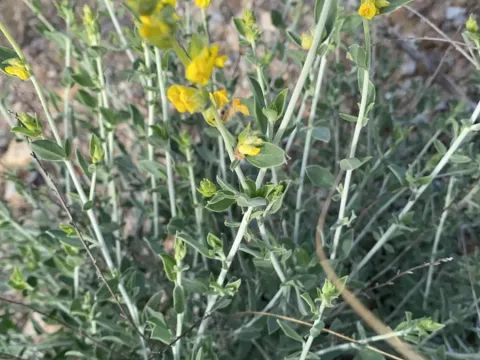
Kidney vetch
Anthyllis L.
Kidney vetch (Anthyllis L.) is a valuable perennial legume known for its hardiness and environmental benefits. Sowing is typically carried out in early spring to take advantage of soil moisture, which is critical for successful germination and the establishment of a robust root system.
What the section contains

Kidney vetch
For long-term stands, the crop is often undersown with spring or winter cereals. This method provides the emerging seedlings with protection from harsh environmental conditions and sunlight, creating a stable microclimate that encourages healthier early growth.
Seeds should be sown at a shallow depth of 1.5 to 3 cm, depending on soil texture. Proper depth management is essential because the seeds have moderate energy, and excessive burial can significantly reduce the overall emergence rate in the field.
Scarification of seeds before planting is a vital practice for this species, as it often exhibits high levels of hard-seededness. Mechanical scarification effectively breaks the seed coat, allowing water absorption and promoting uniform, reliable germination across the field.
The sowing rate is adapted according to the specific planting goal and the presence of other species in the mixture. When grown as a pure stand, the rate is generally between 12 and 16 kg/ha, while it is significantly adjusted downward for multi-species meadow mixtures.
This crop is highly prized for its ecological plasticity and tolerance to extreme conditions. Kidney vetch thrives in harsh environments, displaying excellent frost resistance and the ability to withstand temperature fluctuations throughout the changing seasons.
It is remarkably undemanding regarding soil quality and can perform well on impoverished, sandy, or stony substrates where more sensitive legumes would fail. This makes it an ideal candidate for restoring degraded lands and promoting biodiversity in difficult areas.
The plant prefers neutral or slightly alkaline soil conditions for optimal nutrient uptake. On highly acidic soils, development is often hindered, so agricultural lime is recommended to correct pH levels, thereby increasing the plant's forage yield and nitrogen-fixing efficiency.
Sunlight is a crucial requirement, as the plant is strongly heliophilic. In shaded environments or overly dense stands, the plants tend to become spindly with reduced leaf area, which weakens the overall health and longevity of the crop in the field.
Its deep taproot system allows Kidney vetch to exhibit impressive drought resistance. It can penetrate into lower soil horizons to access deep moisture, enabling it to maintain green cover and biomass production even during periods of significant seasonal water shortage.
Kidney vetch serves multiple хозяйственное roles, primarily as a high-protein forage source for livestock. Its foliage is highly palatable and nutritionally balanced, contributing significantly to the health and productivity of grazing animals throughout the season.
Yield capacity depends on local conditions, but in well-managed stands, it can produce substantial biomass. Beyond forage, its role in soil improvement is significant; as a legume, it fixes nitrogen, enriching the soil for subsequent crops in a rotation.
For beekeepers, this crop is a prized honey plant. Its prolonged flowering period provides a steady supply of nectar and pollen for pollinators, which supports bee colony health and significantly contributes to the overall stability of the local ecosystem.
The plant's contribution to soil structure cannot be overstated. By creating a deep network of roots and contributing organic matter, it helps mitigate soil erosion and improves soil porosity, making it a valuable tool for sustainable land management practices.
Harvesting for hay should ideally occur during the full bloom phase to maximize the concentration of nutrients. Proper timing of the harvest ensures a high-quality product, providing excellent winter feed or supplemental nutrition for various classes of livestock.
While generally resilient, the crop can be susceptible to common legume diseases such as powdery mildew and various leaf spot pathogens, especially in areas with high humidity or poor air circulation within the stand.
Insects, particularly various species of weevils, can threaten young stands by damaging foliage and root nodules. These pests can weaken the plant's ability to fix nitrogen and survive harsh winter conditions, leading to potential thinning of the crop over time.
Preventative measures, such as maintaining adequate space between plants and ensuring efficient water drainage, are the most effective ways to manage fungal threats. Good site selection and weed control further bolster the plant's natural resistance.
Effective management against pests focuses on monitoring and integrated crop management. Using insecticides is considered a last resort; instead, fostering a balanced environment that supports natural predators is often sufficient for maintaining healthy stands.
Overall, Kidney vetch requires minimal chemical intervention. Its competitive nature and ability to establish quickly often allow it to suppress weeds effectively without the need for intensive herbicide applications, supporting a more sustainable farming approach.