
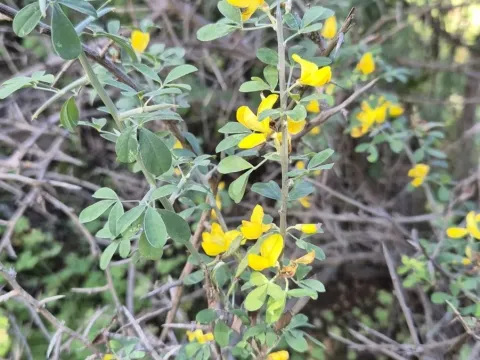
Calicotome intermedia
Calicotome intermedia
Calicotome intermedia is a perennial thorny shrub belonging to the Fabaceae family. This species is native to the Mediterranean region and is highly adapted to the local semi-arid environment, characterized by long, dry summers and mild winters.
What the section contains
Calicotome intermedia
Botanically, it is classified as a xerophyte, featuring reduced leaf surface area and stiff thorns that protect the plant from herbivory. It typically grows as a dense, woody bush that can reach significant size in favorable conditions.
For successful cultivation, the plant requires full sun exposure. It is highly intolerant of shade, which directly affects its structural integrity and reproductive potential. Providing ample light is the most crucial factor for its development.
The soil requirements for Calicotome intermedia are minimal; it thrives in poor, rocky, and well-draining soils. It is an excellent choice for stabilizing dry slopes where other, more demanding plants would fail due to water deficiency.
Agricultural management involves basic pruning to maintain shape and remove deadwood. Due to its nitrogen-fixing capabilities, it contributes to soil fertility, making it a valuable species for restoration ecology in Mediterranean climates.
Root rot is the most significant threat to this shrub, occurring primarily in poorly drained soils or areas with excessive rainfall. Proper drainage is essential to prevent fungal proliferation in the rhizosphere.
Aphids are the most common insect pests, particularly during the spring growth phase. They cluster on tender shoots, and while they rarely kill a mature plant, they can significantly reduce its aesthetic and vigor.
Spider mites may affect the plants during prolonged droughts or periods of extremely low humidity. Their presence is usually indicated by a fine webbing and stippling on the leaves, requiring prompt intervention to avoid defoliation.
Fungal diseases like powdery mildew can occur if the plant is grown in areas with high humidity and stagnant air. Proper spacing between individual plants is necessary to ensure adequate airflow through the canopy.
Physical damage to the bark or branches can allow pathogens to enter the plant tissue. Maintenance practices should focus on clean cuts during pruning and avoiding mechanical injury to the main stem during ground cultivation.