
Caesalpinia mimosoides
Caesalpinia mimosoides
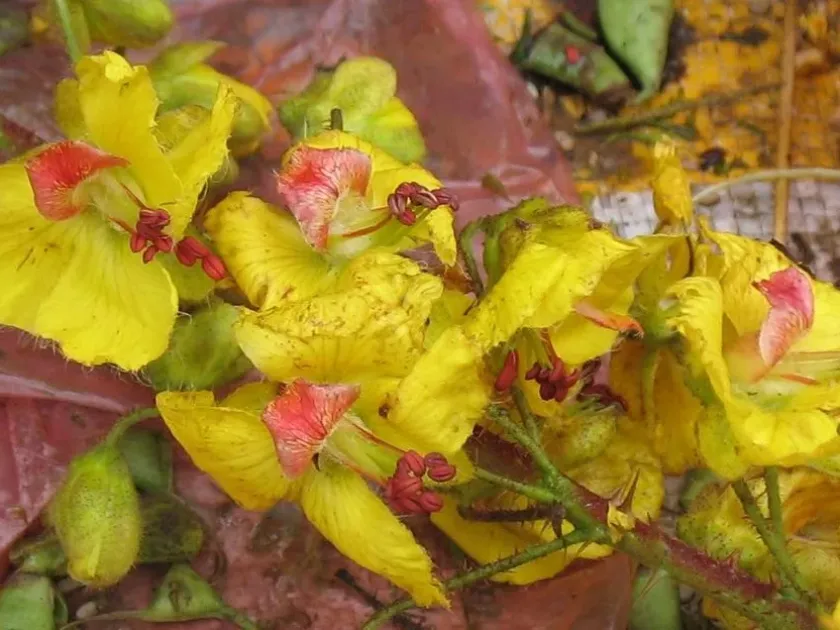
Description
Sowing dates
Caesalpinia mimosoides belongs to the Fabaceae family and is recognized as a perennial shrub. Its biological structure includes thorns and delicate, pinnate leaves.
Propagation is typically achieved through seeds, which require specific preparation. Scarification is highly recommended to break dormancy and ensure uniform germination rates.
Sowing should take place at the start of the growing season when soil temperatures are consistently above 20 degrees Celsius to encourage rapid root development.
The planting density must be managed carefully, ensuring adequate space between plants to allow for airflow and structural growth of the woody stems.
Young seedlings require consistent, light irrigation, while mature plants demonstrate significant resilience to environmental stress and lower water availability.
Growing requirements
This species thrives in open, sun-drenched environments. Full sunlight is critical for its metabolic processes and the production of healthy, vibrant foliage.
Well-drained soil is non-negotiable for this plant. It adapts effectively to sandy and loamy soils but will struggle in waterlogged or heavy clay conditions.
While the plant is hardy and adapted to nutrient-poor substrates, supplemental potassium can enhance its structural integrity and resistance to wind damage.
Temperature management is straightforward, as the plant is well-adapted to tropical and subtropical climates where frost is absent throughout the year.
Minimal soil amendments are required, making it a low-input crop suitable for regions with challenging agricultural soil profiles.
Yield
The yield of biomass is dependent on regular pruning and soil nutrient management, as the plant responds vigorously to light trimming of secondary branches.
Under optimal conditions, the plant produces significant quantities of organic matter, which can be utilized for green manure or local medicinal production.
Harvesting strategies should prioritize the collection of younger, softer stems if the material is intended for processing or medicinal use.
Productivity remains stable over several years provided that the soil is periodically rejuvenated with compost or light organic fertilizers.
Continuous monitoring of yield metrics helps agronomists optimize harvest cycles according to the specific commercial demand for the biomass.
Main diseases and pests
The plant is susceptible to common insect pests, particularly aphids and caterpillars that target the soft tissue of developing leaflets and young stems.
Fungal pathogens can arise during periods of extreme humidity, leading to leaf spots or powdery mildew if the plants are spaced too closely together.
Root rot is the most common physiological disorder caused by improper irrigation practices that lead to water accumulation around the plant base.
Integrated pest management (IPM) techniques, including the use of neem-based sprays, are effective for controlling minor infestations without chemical residue.
Strict field hygiene, including the removal of infected debris, is essential for maintaining the long-term health and vitality of the plantation.