
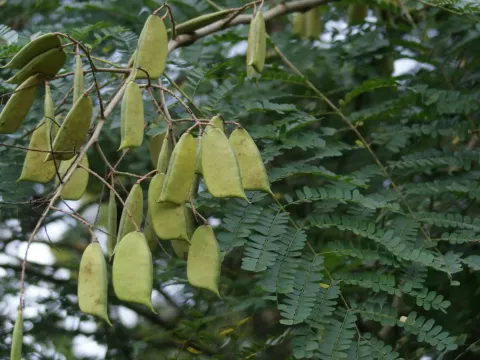
Caesalpinia sappan
Caesalpinia sappan
Propagation of Caesalpinia sappan is primarily achieved through seeds. Because the seeds possess a hard, impermeable seed coat, scarification is a necessary pre-sowing treatment to ensure high germination rates and uniform emergence.
What the section contains
Caesalpinia sappan
The optimal time for sowing is at the beginning of the rainy season. This timing provides the essential moisture required for successful seedling establishment in open-field nurseries or direct planting sites.
In natural habitats, the species demonstrates strong regenerative capacity. However, in controlled cultivation, selecting a well-drained substrate is critical to prevent seedling rot and encourage robust primary root development.
Seedlings should be maintained under moderate shade for the first few months to prevent dehydration and sunscald. Gradually increasing light exposure prepares the young plants for the harsh conditions of a tropical climate.
When transplanting to a permanent site, spacing must account for the mature tree's architecture, which can reach significant heights. Proper distance ensures adequate airflow and light penetration, promoting uniform wood maturation.
Caesalpinia sappan is a quintessential tropical species that thrives in consistently warm environments. Temperatures between 22 and 30 degrees Celsius are ideal for maintaining vigorous metabolic activity and healthy growth cycles.
The plant demonstrates a preference for fertile, well-drained loamy soils but shows remarkable resilience on less nutrient-dense substrates. It prefers a neutral to slightly acidic pH, which optimizes the availability of essential soil minerals.
As a legume, this species participates in nitrogen fixation, contributing to its ability to thrive in diverse soil conditions. This biological advantage reduces the need for heavy nitrogen fertilization during the establishment phase.
Consistent soil moisture is essential during the active vegetative growth phase, though the mature plant develops moderate drought tolerance. Proper drainage remains the most important factor in site selection to avoid waterlogging.
Full sun exposure is required for the plant to concentrate its unique secondary metabolites, specifically brazilin, within the heartwood. Insufficient light significantly diminishes the industrial quality of the harvested timber.
The primary yield of Caesalpinia sappan is its high-quality red-colored heartwood, which takes 10 to 15 years to reach industrial maturity. This long-term cycle necessitates careful planning for sustainable plantation management.
Productivity is measured by the density and purity of the heartwood extracted from the core of the trunk. Older trees are prioritized for harvest as they contain higher concentrations of valuable pigments compared to younger specimens.
Agronomic practices focusing on crown management and sanitation can improve wood density and growth rates. By directing growth energy into the main stem, producers can maximize the amount of high-grade raw material per tree.
Secondary yields include pods and bark, which contain various tannins and medicinal compounds. Integrating these by-products into the production chain adds significant economic value to the plantation operation.
Quality control during growth involves monitoring the wood for pigment development. Advancements in selection and site management aim to increase the efficiency of pigment extraction from every unit of biomass produced.
The main threats to Caesalpinia sappan plantations include root rot pathogens, particularly in areas with poor soil drainage. Proactive measures such as regular fungicidal treatments and proper water management are vital.
Wood-boring insects represent a serious risk, as larvae can create deep galleries within the trunk, significantly devaluing the timber. Monitoring for emergence holes and maintaining tree vigor are standard defensive strategies.
Defoliating insects can occasionally cause mass leaf loss, reducing the plant's photosynthetic capacity and slowing growth. Integrated pest management, including the use of beneficial insects, is preferred for large-scale operations.
Mechanical damage to the bark must be minimized to prevent the entry of decay-causing fungi. Any pruning should be done cleanly and treated with appropriate protective compounds to facilitate rapid wound healing.
Adopting polyculture or crop rotation practices can help break pest life cycles and maintain soil health. This holistic approach is essential for preventing localized epidemics and ensuring long-term plantation viability.
Harvesting involves the felling of mature trees, typically carried out during the dry season to ensure the wood remains stable and free from excessive moisture. This timing is critical for maintaining the high chemical quality of the raw material.
Post-felling, the outer bark and sapwood are removed to isolate the valuable red heartwood. The core is then processed into chips or powder, which serves as the base for various dyes and medicinal extracts.
Transportation of the harvested wood must be done carefully to prevent dampness. Any moisture ingress can trigger mold growth, which degrades the chemical properties of the brazilin pigment essential for the industry.
Following harvest, land preparation for future cycles is necessary to restore soil nutrients. Introducing cover crops or nitrogen-fixing legumes can help revitalize the soil before the next planting phase begins.
Storage must occur in well-ventilated, dry facilities. Proper preservation protocols allow the harvested wood to retain its coloring potential and active biological components for extended periods prior to industrial processing.