
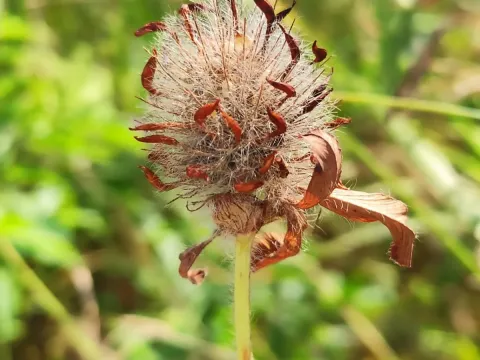
Spreading clover
Trifolium diffusum
Spreading clover is an annual legume that is best established during early spring. Sowing should occur as soon as soil conditions allow for proper tillage, typically when temperatures consistently exceed 8-10 degrees Celsius.
What the section contains
Spreading clover
Winter sowing is also an option in certain regions, allowing the seeds to take advantage of early spring moisture. This method ensures that the plants are well-established before the heat of late spring arrives, maximizing biomass development.
The seeds should be planted at a shallow depth of 0.5 to 1.5 centimeters. A firm seedbed is essential to ensure uniform germination, and rolling the field after sowing is highly recommended to improve soil-to-seed contact.
The seeding rate varies between 8 and 12 kilograms per hectare. When grown as a pure stand, drilling in rows spaced 15 centimeters apart is the standard practice for achieving optimal plant density and growth.
Interseeding with grasses is a common practice to enhance the structural integrity of the forage and increase its palatability for livestock. This practice also helps in better soil nitrogen fixation, creating a balanced and nutrient-rich pasture environment.
Trifolium diffusum thrives in moderately moist, well-drained soils. While it has some tolerance for different soil textures, it performs best on fertile loamy or sandy loam soils that possess a neutral to slightly acidic pH level.
The plant is highly heliophilic, meaning it requires full sun exposure for optimal photosynthesis and growth. Shaded environments will result in spindly plants and a significant reduction in the total dry matter yield.
It displays moderate drought resistance but performs best when soil moisture is consistent throughout the growing season, especially during the budding and flowering stages. Waterlogged conditions must be avoided as they inhibit root respiration.
Fertilization with phosphorus and potassium is recommended to support deep root formation and overall plant vigor. As a legume, it forms a symbiotic relationship with nitrogen-fixing bacteria, reducing the need for synthetic nitrogen fertilizers.
The plant adapts well to local climatic conditions, showing resilience against temperature fluctuations. This makes it a reliable choice for pasture improvement and soil nitrogen enrichment across diverse agricultural landscapes.
The yield of spreading clover is highly dependent on effective crop management and site-specific conditions. Under favorable circumstances, it can provide significant quantities of high-quality green forage for livestock feed.
Peak nutritional content, particularly in terms of protein and sugar levels, is achieved during the full flowering stage. Harvesting at this specific growth phase ensures the highest quality hay or silage for farm animals.
When used in pasture-based systems, it provides rapid regrowth following grazing. This capability allows for multiple grazing cycles within a single season, significantly increasing the productivity of forage lands.
Seed production is a vital aspect of spreading clover cultivation. With proper management and favorable weather conditions, farmers can produce high-quality seed lots for future planting or market sale.
Typically, the crop is harvested one or two times per season. This provides a balance between sustained biomass production and the plant’s ability to recover, ensuring consistent forage availability for the farm.
Fungal diseases like powdery mildew pose a threat, particularly in regions with high humidity. Crop rotation and timely harvesting serve as the most effective preventative measures against such outbreaks.
Insects such as clover weevils and phytonomus species can cause damage to foliage and reproductive organs. Regular field scouting is necessary to detect and manage these pests before they reach economic damage thresholds.
Root rot is often a symptom of poor drainage or compacted soils. Improving soil aeration and implementing proper water management strategies are essential to protecting the plant's health and longevity.
Aphid infestations can occur during hot, dry spells, reducing the aesthetic and nutritional quality of the forage. Integrated pest management, focusing on biological controls, is preferred over broad-spectrum chemical application.
Continuous monitoring of the crop is crucial for maintaining a healthy stand. Early detection of any pathogens or pests allows for localized treatments, thereby preserving the overall health and yield potential of the pasture.
Hay production involves cutting the clover during the flowering phase and allowing it to dry in windrows. Careful handling is required to minimize leaf shatter, as the leaves contain the majority of the plant's nutritional value.
Silage production utilizes specialized machinery for rapid cutting, chopping, and compression. This method preserves the nutrient profile of the plant more effectively, even when weather conditions are less than ideal for hay drying.
Harvesting for seed is carried out when the flower heads have turned brown. It is important to harvest at the right time to avoid seed loss caused by shattering as the plants become brittle and dry.
Post-harvest processing involves thorough cleaning to remove impurities and moisture. Proper storage in cool, dry conditions ensures that the seeds maintain high germination rates for future planting seasons.
Using advanced harvesting equipment improves efficiency and reduces crop loss. Adhering to technical guidelines for harvesting guarantees the production of high-quality forage and seeds suitable for various agricultural needs.