
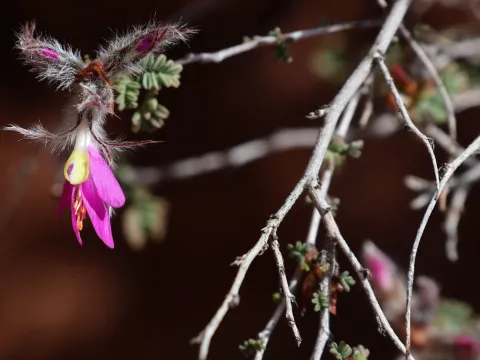
Dalea formosa
Dalea formosa
Dalea formosa is typically propagated through seed, which ensures better adaptation to local soil profiles. Sowing should ideally occur in the autumn, allowing the seeds to undergo natural winter stratification for better germination rates.
What the section contains
Dalea formosa
When sowing in the spring, seeds must be scarified to break their hard seed coat. A planting depth of 1 to 2 centimeters in well-prepared, aerated soil is recommended to ensure successful establishment.
Soaking seeds in warm water for 12 to 24 hours before planting can significantly increase germination speed. This technique is often used in nursery settings to ensure uniform plant density across the field.
While the plant can spread through self-seeding in the wild, controlled agricultural cultivation requires specific spacing. Keeping rows 60 to 80 centimeters apart allows the plants to develop deep, robust root systems.
The seedling stage is slow-growing, making it essential to keep the rows free from invasive weeds. Competition for sunlight and nutrients during the first year of life can severely stunt the development of this legume.
Dalea formosa is a drought-tolerant perennial shrub belonging to the Fabaceae family. Its native range includes arid environments of the Southwestern United States and Mexico, where it thrives in harsh conditions.
The culture requires well-drained, sandy, or rocky soils. It is highly sensitive to waterlogged conditions, which can lead to rapid root rot, making it unsuitable for heavy clay or low-lying agricultural zones.
It is a sun-loving species that requires full exposure to thrive. Its deep taproot allows it to survive in areas where rainfall is minimal, making it an excellent candidate for sustainable agricultural projects.
Regarding climate, the plant exhibits good cold hardiness within its native range. However, sudden fluctuations in temperature can stress the plant, necessitating careful site selection to avoid frost pockets.
As a legume, Dalea formosa fixes atmospheric nitrogen through root symbiosis. This characteristic makes it highly valuable for soil restoration and improving the nutrient quality of degraded land.
The primary threats to Dalea formosa are fungal pathogens, specifically those causing root rot during periods of excessive moisture. Maintaining proper drainage is the most effective way to prevent these diseases.
Soil-borne insects and larvae can damage the roots of young plants, potentially causing death in early stages. Aphid infestations may also occur during humid spells, targeting the tender foliage and stems.
Fungicidal treatments based on copper are recommended if symptoms appear. Maintaining proper space between plants to allow for airflow is a critical preventative measure against leaf spot and other fungal issues.
Parasitic plant encroachment can occasionally stress the shrubs, necessitating manual removal to prevent long-term decline. Monitoring the field regularly is vital for early detection of these issues.
Good agricultural practices, such as proper crop rotation and avoiding over-irrigation, are the best defenses against typical pests. A healthy, well-spaced crop is far more resilient to biological threats.