
Adenocarpus aureus
Adenocarpus aureus
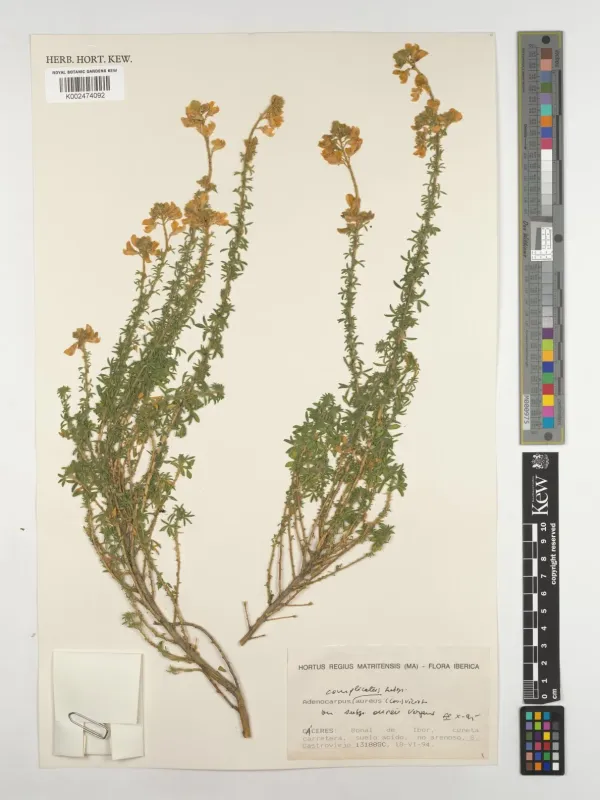
Description
Growing requirements
Adenocarpus aureus, commonly known as golden adenocarpus, belongs to the Fabaceae family. This woody shrub is native to the high-altitude regions of North Africa and parts of the Iberian Peninsula, where it thrives in rocky terrain.
The plant is highly adapted to sunny, open environments. It requires full sun exposure to maintain its compact shape and to ensure abundant flowering during the spring and early summer seasons.
Soil requirements for Adenocarpus aureus focus on drainage. It performs exceptionally well in poor, gritty, or sandy soils. It is critical to avoid heavy, waterlogged clay soils, as they promote root rot and decline.
Regarding climate, this shrub is hardy but prefers temperate conditions. While it can withstand periods of intense summer heat, it needs protection from severe winter frost in colder regions to prevent dieback.
In terms of usage, the plant is primarily cultivated as an ornamental feature. Its bright yellow, pea-like flowers make it a perfect addition to rock gardens, xeriscapes, and erosion-control planting schemes.
Main diseases and pests
The most significant threat to the health of Adenocarpus aureus is root rot caused by poor soil drainage. If the substrate remains too wet, the roots will quickly become compromised and fail.
Pests such as aphids are frequently encountered during the growing season. They target the tender tips of the branches, potentially stunting growth if left untreated for an extended period.
Spider mites can also be a nuisance during periods of extreme dryness and high temperatures. They manifest as fine webbing on the leaves, which can lead to premature leaf drop and overall plant stress.
Powdery mildew may develop if the plant is situated in an area with poor airflow. Maintaining proper spacing and pruning back any overcrowded branches helps to facilitate natural ventilation within the shrub.
General maintenance, including the removal of dead or diseased wood in late winter, serves as a preventative measure against various fungal pathogens. Healthy, vigorous plants generally show much higher resistance to pests.