
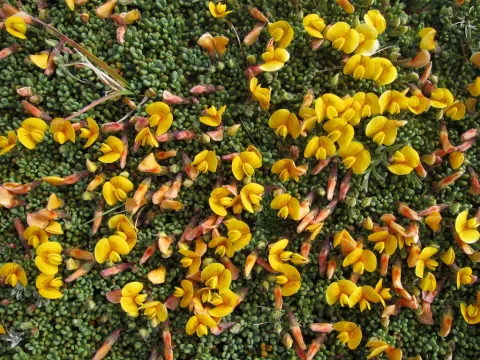
Adesmia
Adesmia
Adesmia is a diverse genus within the Fabaceae family, encompassing various species adapted to different South American habitats. The sowing process generally begins with the onset of the growing season when soil temperatures are stable and moisture is sufficient for initial growth.
What the section contains

Adesmia
Seeds of many Adesmia species possess hard coats, requiring mechanical scarification or specialized treatments to break dormancy and ensure uniform germination. Proper seedbed preparation is essential to facilitate root development and seedling establishment.
Agronomic guidelines suggest planting at a shallow depth of 1 to 2 centimeters. Maintaining appropriate row spacing allows for better aeration and access to sunlight, which is crucial for the optimal development of these light-loving plants.
Inoculation with specific rhizobial strains is a standard practice that significantly enhances the plant's ability to fix atmospheric nitrogen. This symbiotic relationship provides a biological boost, reducing the need for chemical fertilizers.
Timing the sowing carefully to avoid frost events is vital. Even for hardy species, late spring frost can cause significant damage to emerging seedlings, leading to reduced stand density and poor initial crop performance.
Adesmia exhibits high environmental plasticity, thriving in a range of conditions from the arid regions of Patagonia to the high-altitude Andean environments. It performs best in well-drained, sandy, or loamy soil textures.
Exposure to direct sunlight is fundamental, as Adesmia species are typically sun-loving heliophytes. Reduced light availability often results in stunted growth and a significant decrease in biomass and floral production.
The plant demonstrates remarkable drought tolerance once established, thanks to its deep taproot system. It is well-suited for regions where water resources are limited or unpredictable, making it a robust option for sustainable farming.
Soil pH levels should generally be neutral or slightly acidic. Adesmia is sensitive to high salinity, which can inhibit the growth of the plant and disrupt the symbiotic nitrogen-fixation process provided by root nodules.
Proper field management includes ensuring effective drainage, as waterlogged conditions are highly detrimental. Poor drainage significantly increases the risk of crown and root rot, which are common issues in water-stressed soils.
The yield potential of Adesmia is largely influenced by the specific species used and the environmental conditions of the region. As a high-protein forage source, it is highly regarded for its nutritional value in pastoral systems.
In favorable conditions, Adesmia produces substantial biomass. Regular harvesting or controlled grazing during the vegetative stage helps maintain the plant's vigor and stimulates productive regrowth for subsequent cycles.
Seed production requires careful monitoring due to uneven ripening across the plant canopy. Optimizing the harvest time is crucial to capture maximum seed volume and prevent losses caused by pod shattering.
Phosphorus and potassium fertilization can enhance yield outcomes, particularly in nutrient-poor soils. Strategic applications during early growth phases can significantly improve both biomass and reproductive performance.
Effective management of grazing intensity ensures the longevity of Adesmia stands. By rotating pastures and allowing for adequate recovery periods, farmers can maintain high productivity levels over multiple seasons.
Fungal pathogens are the primary biological threats to Adesmia, particularly in regions with high humidity or poor soil aeration. Root and stem rots are common, especially when plants are weakened by environmental stress.
Various insect pests, including weevils and mites, can cause severe damage to both foliage and flowers. Integrated pest management strategies, focusing on biological controls and regular scouting, are essential for mitigation.
Competition from weeds is most critical during the establishment phase. Because Adesmia often exhibits slow initial growth, timely weeding or the use of selective herbicides is necessary to prevent complete loss of seedlings.
Overgrazing is a major threat to multi-year stands, leading to soil compaction and the depletion of root reserves. Implementing rotational grazing schedules is necessary to preserve the plant population.
Extreme weather events, such as persistent high winds during the pollination phase, can significantly reduce yield by preventing successful fertilization of the flowers and limiting seed set.
Harvesting for forage is best performed using standard mowing equipment. The optimal time is during the early flowering stage, when the nutrient content is highest and the stems have not yet become overly fibrous.
For seed collection, a two-phase harvesting approach is often preferred. This involves cutting the plants and allowing them to dry in windrows, which helps manage the natural dehiscence of the pods and reduces seed loss.
Post-harvest processing involves threshing and cleaning the seed material to remove chaff and debris. Proper sieve selection is necessary due to the variations in seed size across different species of the genus.
Storage must be conducted in cool, dry conditions to maintain seed viability. High moisture levels in storage can lead to rapid fungal growth and the breakdown of important biological processes required for future germination.
Immediate transportation of harvested green mass is required to prevent heat accumulation and fermentation. Efficient logistics are essential to ensure the quality of the forage for livestock feeding programs.