
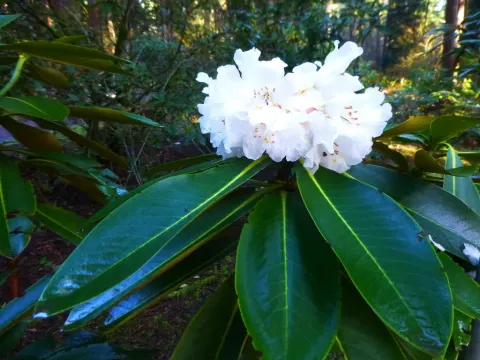
Rhododendron watsonii
Rhododendron watsonii
Rhododendron watsonii is a striking deciduous shrub belonging to the Ericaceae family. Originating from the high-altitude forests of Sichuan, China, it is prized by enthusiasts for its structural elegance and large, leathery foliage that adds texture to any landscape.
What the section contains
Rhododendron watsonii
Botanically, this species is noted for its impressive flower trusses which typically appear in late spring. The plant exhibits a moderate growth habit, reaching significant heights in maturity, and requires a sheltered location to protect its leaves from harsh winds and direct sunlight.
Successful cultivation depends heavily on soil conditions: it must be well-drained, rich in organic matter, and acidic. Amending heavy soils with peat moss or composted pine needles is essential to create the environment this species requires for healthy root development.
Water management is critical for this species as it prefers constant moisture but cannot tolerate waterlogged conditions. Regular irrigation is recommended, especially during dry spells, coupled with a generous layer of mulch to prevent evaporation and regulate ground temperature.
The primary use of Rhododendron watsonii is in horticultural displays, specifically in specialized collections and woodland gardens. It serves as an excellent focal point due to its unique appearance and is often favored by gardeners looking for rare, high-quality specimens.
The most significant pathological threats include root rot and leaf spot diseases caused by soil-borne pathogens. Maintaining air circulation around the canopy and ensuring the planting site is not prone to flooding are the best preventative measures against these issues.
Common pests such as lace bugs and spider mites are frequent visitors, particularly during hot and dry weather. To manage these, gardeners should monitor the undersides of the leaves closely and apply appropriate horticultural oils or systemic pesticides when infestations are detected.