
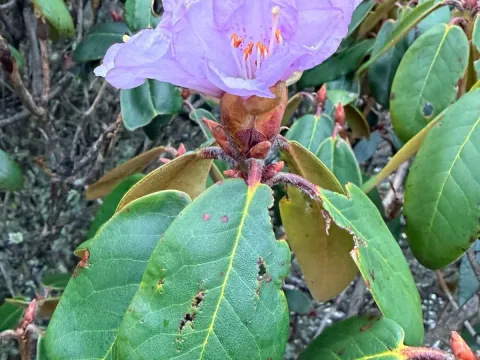
Rhododendron wallichii
Rhododendron wallichii
Rhododendron wallichii is a prominent evergreen shrub belonging to the Ericaceae family. Native to the high-altitude regions of the Himalayas, including Nepal and northeastern India, this species is well-adapted to cool, misty, and high-elevation environments where it thrives on rocky slopes.
What the section contains
Rhododendron wallichii
Cultivation of this species requires a climate that mimics its natural habitat, emphasizing the need for cool temperatures and consistent atmospheric humidity. In garden settings, it is best placed in cool, semi-shaded areas that are sheltered from harsh, drying winds and intense, direct afternoon sun.
The soil must be acidic, ideally ranging between 4.5 and 5.5 in pH, and highly organic. A mixture of peat moss, pine needles, and grit provides the necessary acidity and drainage. Proper drainage is essential, as the plant's delicate root system is highly susceptible to waterlogging and subsequent root rot.
Botanically, the plant is recognized by its distinct leathery, elliptical leaves often featuring a persistent indumentum (hair-like covering) on the underside. Its ornamental value stems from its clusters of purple to lilac flowers, which often display dark spots on the petals, creating a significant visual appeal during the spring blooming season.
Maintenance involves routine mulching with organic material to keep the root zone cool and moist. Due to the plant’s shallow root system, surface cultivation should be avoided; instead, hand-weeding is recommended to prevent any mechanical damage that could allow disease pathogens to enter the plant tissues.
The primary health threats for Rhododendron wallichii are fungal pathogens such as Phytophthora root rot, usually exacerbated by poor soil drainage. Maintaining a strict watering schedule and providing excellent aeration around the foliage are the most effective cultural control methods.
Insect pests, such as the rhododendron bug and spider mites, can become problematic during hot, dry spells. Keeping the plants well-hydrated and applying horticultural oils or appropriate systemic insecticides during early infestation stages will help preserve the health and vigor of the shrubs.