
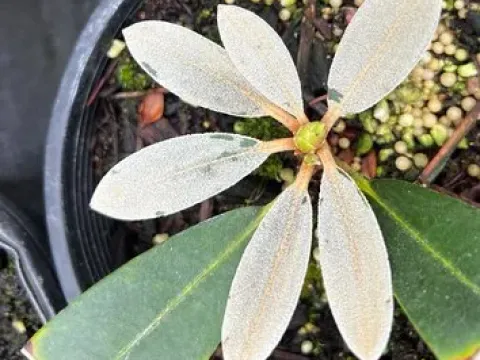
Snow Rhododendron
Rhododendron niveum
Snow Rhododendron (Rhododendron niveum) is a unique evergreen species belonging to the Ericaceae family. Known for its distinct white-tomentose undersides of the leaves, this shrub serves as an exquisite ornamental specimen in specialized gardens.
What the section contains
Snow Rhododendron
Originating from the high altitudes of the Eastern Himalayas, specifically Sikkim, this species is adapted to cool, moist conditions. It thrives in high-altitude forests where humidity is high and temperature fluctuations are relatively minimal.
The cultural requirements are strict, focusing on acidic, well-draining, and humus-rich soil. The plant cannot tolerate stagnant water, which can easily lead to root rot; therefore, creating a raised bed or adding sufficient organic material is crucial.
Climate needs include a sheltered location protected from scorching afternoon sun and strong winds. The plant is best suited for regions with mild summers, as extreme heat often stresses the foliage and inhibits growth.
Proper agricultural practices include continuous mulching to maintain soil acidity and moisture levels. Yearly fertilization with slow-release acid-loving plant fertilizer is recommended for optimal vegetative development.
The primary threats to Rhododendron niveum include various fungal infections, notably Phytophthora, which can be fatal if the soil is poorly drained. Preventive drainage is the most effective defense.
Common pests include the rhododendron leafhopper and scale insects. These pests can cause significant leaf damage, which may subsequently provide entry points for secondary fungal infections.
Nutrient deficiencies, particularly chlorosis, frequently occur if the soil pH is not kept in the range of 4.5 to 5.5. Regular monitoring and use of iron chelates are common management practices.
Winter damage is a significant concern in colder climates, where freezing winds can dehydrate the evergreen leaves. Protective coverings are necessary to maintain the plant's health throughout the dormant season.
General maintenance should include regular sanitation of the plant by pruning away dead or weak wood, ensuring good airflow throughout the canopy to prevent the buildup of pathogens.