
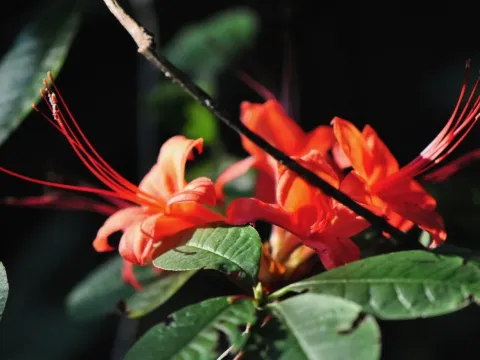
Plum-leaved azalea
Rhododendron prunifolium
The Plum-leaved azalea (Rhododendron prunifolium) is a deciduous shrub belonging to the Ericaceae family. Native to the southeastern United States, it is celebrated for its unique habit of blooming in mid-to-late summer, significantly extending the ornamental season.
What the section contains
Plum-leaved azalea
Cultivation requires a specific microclimate that mimics its natural woodland habitat. Ideally, the shrub should be planted in partial shade, where it is protected from intense afternoon sun, which can dehydrate the foliage and inhibit flowering.
Soil conditions are critical for this species. It demands well-draining, acidic soil (pH 4.5–5.5) rich in organic matter. Gardeners should incorporate peat moss, pine bark, or leaf mold into the planting hole to ensure optimal conditions for root development.
Watering requirements are consistent: the plant needs steady moisture, particularly during the hot summer months. Mulching the root zone with pine needles or wood chips is essential to retain soil moisture and stabilize root temperatures against fluctuations.
In terms of agricultural use, this species is highly valued in horticulture for its resilience in shaded garden spaces and its vibrant, deep-colored flowers. Proper placement in the landscape is key to maximizing its health and aesthetic output.
Fungal diseases, specifically root rot caused by stagnant water, pose the most significant risk to the plant's survival. Improving soil drainage and ensuring the crown of the plant is not buried too deep are fundamental preventative measures against these pathogens.
Pests such as lace bugs and spider mites are common concerns for Rhododendron growers. Integrated pest management, including regular inspection and the application of targeted insecticides, is recommended to mitigate the impact of these infestations.