
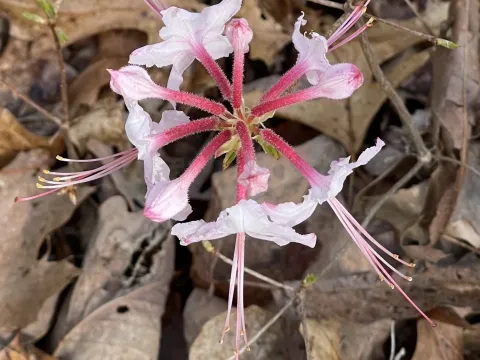
Pinxterbloom azalea
Rhododendron periclymenoides
Pinxterbloom azalea is a deciduous shrub belonging to the Ericaceae family, native to the eastern United States. It is highly valued for its striking clusters of pinkish, trumpet-shaped flowers that bloom in early spring.
What the section contains
Pinxterbloom azalea
This species requires acidic soil conditions with a pH range between 4.5 and 5.5. A well-draining soil medium rich in organic matter, such as peat moss or pine bark, is essential for maintaining the health and vigor of the root system.
The ideal location for planting includes areas with dappled sunlight or partial shade. Exposure to intense afternoon sun can scorch the foliage, while deep shade may lead to reduced flower production and a more elongated, weak growth habit.
Consistent soil moisture is necessary for optimal development. During dry spells, supplemental irrigation is crucial to prevent dehydration, though care must be taken to ensure the soil does not become waterlogged, which promotes root rot.
In landscape design, it is often utilized for woodland gardens and as an understory shrub. Its naturalistic form and fragrant blooms make it a popular choice for native plant enthusiasts looking to enhance local biodiversity in their garden projects.
Common plant health issues include fungal diseases like powdery mildew, which often appears on leaves during periods of high humidity. Proper spacing between plants significantly improves air circulation, helping to prevent the rapid spread of fungal spores.
Pests such as lace bugs and spider mites are frequent adversaries for this cultivar. These insects feed on the sap of the leaves, resulting in stippling and discolouration, which detracts from the shrub's aesthetic appeal.
Effective management includes the use of targeted insecticides or horticultural oils when pest activity is detected. It is important to treat the underside of the leaves where these pests typically congregate.
Root rot caused by Phytophthora species is a critical threat in poorly drained soils. Preventing this requires careful selection of planting sites and the use of raised beds or specialized drainage layers if the native soil is too compact.
Maintaining plant vigor through balanced fertilization designed for acid-loving plants helps the shrub better resist biological stressors. Regular monitoring and early intervention are the cornerstones of effective disease control.