
Pieris
Pieris
Pieris is an evergreen shrub belonging to the Ericaceae family, widely known for its ornamental foliage and pendulous clusters of bell-shaped flowers. It originates from temperate regions of Asia and North America.
What the section contains


Pieris
This crop requires specific edaphic conditions, specifically acidic soils with a pH between 4.5 and 5.5. The soil must be well-drained and rich in organic matter to prevent root rot, which is a common issue for the species.
In terms of climatic requirements, Pieris thrives in partial shade. Excessive exposure to direct sunlight can damage leaves, whereas sheltered locations protect the plant from harsh winds that may dehydrate the foliage.
Moisture management is essential; the plant requires consistent watering, especially during the summer, but it cannot tolerate waterlogged soils. Mulching with acidic materials like pine bark is highly recommended.
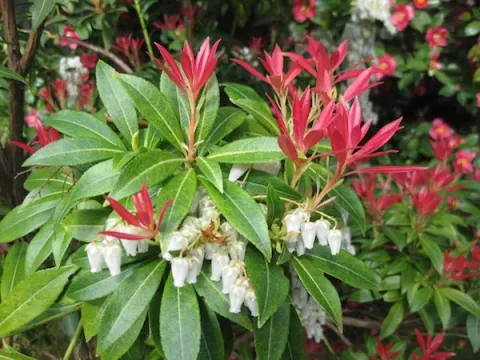
The ornamental value of Pieris lies in its year-round appeal. The young growth often emerges in vivid red or bronze shades, providing a significant visual contrast against the mature dark green leaves.
The primary diseases affecting Pieris are fungal in nature. Phytophthora root rot is particularly destructive and usually occurs in sites with inadequate drainage or prolonged high soil moisture levels.
Pest pressure is frequently attributed to the lace bug and spider mites. Lace bugs specifically target the foliage, causing a mottled appearance and reducing the overall photosynthetic capacity of the shrub.
Management of these threats involves cultural practices such as regular pruning to improve airflow and the application of targeted insecticides or acaricides during the active growing season.
Proactive care, including the removal of dead or infected branches, is vital to contain disease spread and maintain the aesthetic structure of the decorative shrub throughout the year.
Monitoring the plant for signs of stress, such as yellowing leaves, is recommended to intervene early before significant damage occurs to the root system or the canopy.