
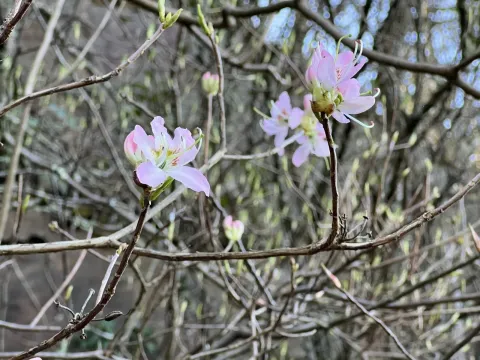
Pinkshell azalea
Rhododendron vaseyi
The Pinkshell azalea (Rhododendron vaseyi) is a deciduous shrub belonging to the Ericaceae family. Native to the Blue Ridge Mountains of North Carolina, it is prized for its exquisite pink, spotted flowers that bloom in early spring.
What the section contains
Pinkshell azalea
To thrive, this plant demands acidic soil conditions with a pH range between 4.5 and 5.5. Gardeners should ensure the planting site has excellent drainage, as the species is highly susceptible to root suffocation in waterlogged soils.
This shrub prefers partial shade environments, mimicking its natural forest habitat. Exposure to intense afternoon sun can scorch the foliage, so positioning under deciduous trees or near north-facing walls is often ideal.
Moisture management is crucial throughout the growing season. The root system is shallow and fibrous, meaning that consistent mulch application—using pine bark or needles—is essential to retain soil moisture and regulate temperature.
Maintenance involves minimal pruning, typically performed immediately after flowering. Fertilization should be limited to acid-loving plant formulas, applied carefully to avoid over-concentration of salts near the roots.
Root rot, primarily caused by Phytophthora species, remains the most significant threat to the plant's health. This condition is almost always linked to poor drainage or over-irrigation in heavy soil types.
Insect pests such as azalea lace bugs can cause severe aesthetic damage by sucking juices from the leaves, resulting in stippling and eventual leaf drop. Monitoring is essential during the warmer months of late spring.
Spider mites represent another common threat, especially in sheltered, dry spots. Regular misting or the use of horticultural oils can manage populations before they cause significant stress to the shrub.
Fungal leaf spots are frequently encountered during humid, rainy seasons. Improving air circulation around the shrub and removing fallen, diseased foliage are primary cultural control methods.
If chlorosis appears, it often signals an issue with soil alkalinity rather than a disease. Adjusting the soil pH with organic amendments or iron chelates is the standard horticultural response to restore green color.