
Hairy manzanita
Arctostaphylos columbiana
Description
Growing requirements
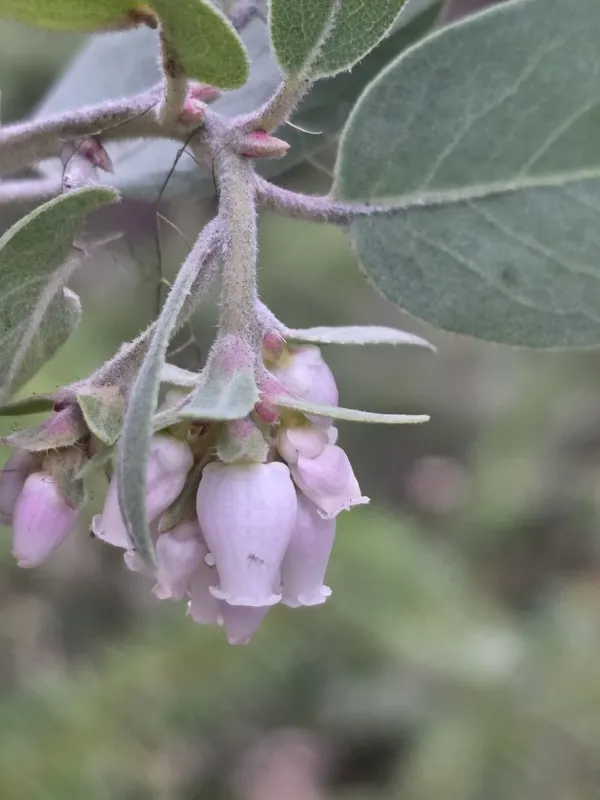
Hairy manzanita (Arctostaphylos columbiana) is an evergreen shrub belonging to the Ericaceae family. It is distinct due to its stiff, hairy foliage and smooth, reddish bark that naturally peels during the growth process.
Native to the Pacific Northwest of North America, this plant thrives in open, sun-drenched environments. It is well-adapted to poor, rocky, or sandy soils that provide excellent drainage, which is critical for its health.
Soil acidity is a fundamental requirement for this species. It prefers acidic conditions and will suffer from chlorosis if grown in alkaline or lime-heavy soils, which significantly impacts its overall vitality.
The plant exhibits exceptional drought tolerance once established, making it a sustainable choice for xeriscaping. It does not tolerate heavy, waterlogged soils, which frequently cause root rot and rapid plant decline.
In terms of practical use, Hairy manzanita is primarily utilized in ornamental horticulture and landscape architecture. It is an excellent choice for erosion control on slopes and for adding structural interest to native garden designs.
Main diseases and pests
Fungal pathogens are the primary threats to Hairy manzanita, particularly in humid climates. Leaf spot diseases and various types of rust are common if air circulation is inadequate or if foliage remains wet for long periods.
Insects like aphids and scale insects can infest young shoots, potentially causing stunted growth. Integrated pest management strategies, including the use of horticultural oils, are effective for controlling these populations.
Root rot is the most common disease associated with poor soil management. Overwatering and the lack of a proper drainage system are the main causes, often leading to irreversible damage to the root system.
Physical injury to the bark can invite bacterial infections or pests. Therefore, all maintenance activities, such as pruning or site preparation, must be conducted carefully to maintain the integrity of the plant's structure.
Reduced sunlight and stagnant air are significant environmental stressors that lower the plant's natural resistance to diseases. To ensure longevity, the shrubs should be planted in open, well-ventilated locations.