
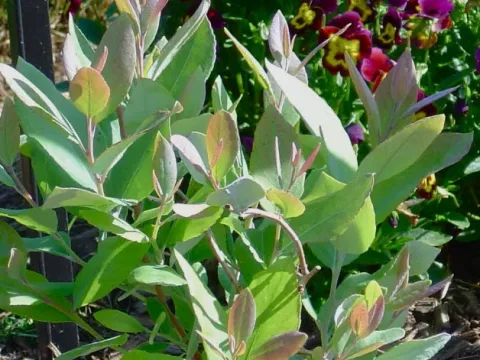
Zenobia pulverulenta
Zenobia pulverulenta
Zenobia pulverulenta, commonly known as dusty zenobia, is a deciduous or semi-evergreen shrub belonging to the Ericaceae family. Native to the coastal plains of the southeastern United States, it is highly valued for its striking, waxy blue-green foliage and clusters of bell-shaped white flowers.
What the section contains
Zenobia pulverulenta
This species is strictly an acid-loving plant. It thrives in soils with a low pH and requires a high content of organic matter. Gardeners must ensure the soil is acidic, such as peat or pine bark-based mixes, and completely free of lime or alkaline amendments.
Water management is critical for the survival of this shrub. It naturally grows in damp, boggy environments and demands constant soil moisture. However, the soil must be well-drained; stagnant water can lead to root suffocation and eventual plant decline.
The ideal location for Zenobia pulverulenta is in partial shade. While it can tolerate more light in cooler northern climates, it requires protection from intense midday sun and drying winds, which can easily scorch its delicate, glaucous leaves.
In terms of climate, it is moderately hardy but benefits from a sheltered position. Applying a thick layer of organic mulch around the root zone helps regulate soil temperature and keeps the roots moist, which is essential for healthy vegetative growth.
Like many members of the Ericaceae family, Zenobia pulverulenta is susceptible to root rot, particularly Phytophthora, if planted in heavy or waterlogged soil. Proper drainage and aeration of the root zone are the most effective preventive measures.
Fungal diseases such as powdery mildew can occasionally affect the foliage, especially in stagnant or humid conditions where airflow is restricted. Pruning the shrub to maintain an open canopy structure significantly reduces this risk.
Pests such as scale insects and spider mites are known to infest the plant. These pests thrive in dry environments and can cause significant damage by sucking sap from the leaves, leading to yellowing, curling, and early leaf drop.
Nutrient deficiency, specifically iron chlorosis, is a common non-infectious threat. It occurs when the soil pH rises above 5.5, preventing the plant from absorbing necessary micronutrients, resulting in pale, yellowing leaves with green veins.
Regular monitoring and integrated pest management practices are recommended. Avoiding the use of overhead irrigation during the evening can prevent moisture accumulation on leaves, thereby inhibiting the development of various fungal pathogens.