
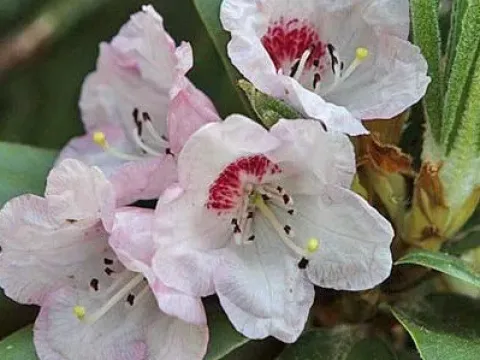
Long-scaled rhododendron
Rhododendron longesquamatum
The long-scaled rhododendron (Rhododendron longesquamatum) belongs to the Ericaceae family. This evergreen shrub is distinguished by its unique dense covering of long, bristle-like scales on the shoots, which characterizes its aesthetic appeal.
What the section contains
Long-scaled rhododendron
The species originates from the mountainous regions of Western China. It thrives in cool, humid environments at elevations up to 3,000 meters, typically found in high-altitude forest margins and coniferous mountain slopes.
Cultivation requires acidic, well-draining soil rich in organic matter. Gardeners should provide a mix of peat moss, pine needles, and grit to create an environment that mimics its natural habitat and allows for root aeration.
It prefers dappled shade or partial sunlight. Exposure to direct midday sun should be avoided, as it can cause leaf scorch. The plant also requires protection from strong, desiccating winds that can damage the foliage in winter.
Maintaining high humidity and moisture levels is essential for growth. Mulching with pine bark is highly recommended to regulate soil temperature, suppress weeds, and keep the roots cool during warmer periods.
The most significant threats to Rhododendron longesquamatum include soil-borne fungal diseases like Phytophthora, which are often triggered by poor drainage and waterlogged conditions around the root ball.
Pests such as rhododendron lace bugs and spider mites are common concerns. These insects feed on the leaves, leading to chlorosis, stippling, and a general decline in the plant's overall health and vigor.
Preventive measures include applying systemic fungicides in early spring and maintaining proper plant spacing to ensure adequate air circulation, which reduces the buildup of humidity on the leaves.
Regular inspection of the leaf underside is vital to detect early pest colonization. Using horticultural oils or specific insecticides during the active growth phase can effectively manage outbreaks.
Cultural practices are paramount: ensure the root zone never completely dries out but never stays waterlogged. Proper site selection combined with vigilant monitoring forms the backbone of successful rhododendron management.