
Leucopogon
Leucopogon
Leucopogon is a genus of evergreen shrubs belonging to the family Ericaceae, specifically the subfamily Epacrideae. Native primarily to Australia and New Zealand, these plants have adapted to a wide range of ecological niches, from rocky slopes to open forests.
What the section contains


Leucopogon
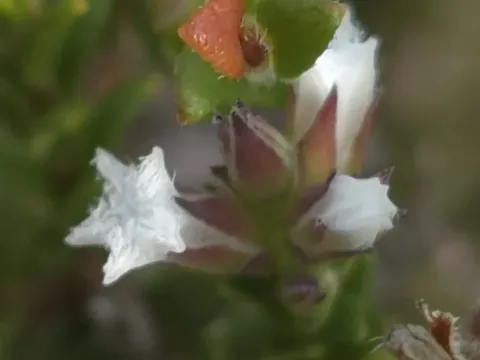
The botanical structure of Leucopogon is defined by its small, often prickly leaves and distinctive, typically white or cream-colored tubular flowers. The name itself reflects the dense hairs found on the inner surfaces of the petals, which give them a bearded appearance.
Successful cultivation requires specific soil conditions, specifically well-draining, acidic, and nutrient-poor substrates. Members of this genus are notoriously sensitive to high levels of phosphorus, which can be toxic to their fine, hair-like root systems.
Climate requirements for this plant generally involve mild temperatures and consistent moisture levels without waterlogging. They thrive in environments where they receive adequate light, but they must be protected from extreme heat and drying winds during the growing season.
Economically, Leucopogon is valued as a decorative plant in landscaping and horticulture. It serves as an excellent choice for rock gardens and native plant collections, where it provides structural interest and supports local pollinator populations throughout its blooming period.
Root rot, often caused by water-mold pathogens like Phytophthora, is the most severe threat to the health of Leucopogon plants. Excess soil moisture quickly compromises root integrity and leads to plant decline.
Pests such as scale insects and aphids can colonize the stems and foliage of the shrub. Early detection and mechanical removal are often preferred over strong pesticides to prevent potential phytotoxicity to the sensitive leaves.
Nutrient imbalances, particularly iron deficiency or phosphorus toxicity, often manifest as leaf chlorosis. Correcting soil pH is essential, as the plants cannot access necessary minerals if the soil is too alkaline or improperly balanced.
Air circulation is critical for preventing fungal leaf spots. Planting in dense thickets without adequate spacing can increase humidity levels, creating an environment that favors pathogen growth and foliage decay.
Preventive maintenance, including the use of high-quality organic mulch and controlled irrigation, is the most effective strategy for managing the health of these sensitive horticultural species over the long term.