
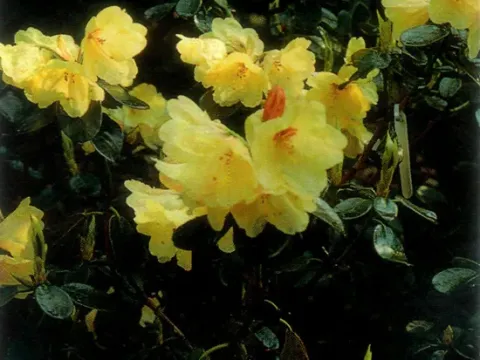
Lemon-flowered rhododendron
Rhododendron citriniflorum
Rhododendron citriniflorum belongs to the Ericaceae family and is an evergreen shrub characterized by its distinct lemon-yellow flowers. Native to the high-altitude regions of Southwest China, it thrives in environments that mimic subalpine conditions.
What the section contains
Lemon-flowered rhododendron
The climate requirements for this species include cool temperatures and high atmospheric humidity. It is essential to plant this rhododendron in a location that provides partial shade, as direct sun exposure can lead to leaf scorch and heat stress.
The soil must be acidic, with a pH level between 4.5 and 5.5. A well-draining, nutrient-rich substrate, typically composed of peat moss, pine needles, and sand, is necessary to prevent root suffocation and promote healthy microbial activity in the rhizosphere.
Watering management is critical for this species. Due to its shallow root system, the soil should be kept consistently moist but never waterlogged. Irrigation should be performed using soft water to maintain the required acidity of the root zone.
Botanically, it forms a dense, slow-growing structure. The leaves are typically leathery and feature a distinctive indumentum (hair-like covering) on the underside, which helps the plant conserve moisture and resist the environmental pressures of its native highlands.
Phytophthora root rot is a major threat to Rhododendron citriniflorum, often triggered by poor drainage and excessive moisture. Prevention involves the use of high-quality, porous soil mixtures and avoiding deep planting of the root ball.
Chlorosis is a frequent issue if the soil pH rises above the optimal range. When the environment becomes too alkaline, the plant cannot efficiently uptake iron, which results in interveinal yellowing of the foliage, necessitating chemical acidification or chelated iron supplements.
Pests such as rhododendron lace bugs can severely damage the foliage by piercing the leaf tissue. Regular monitoring is advised, and infestations should be treated with appropriate systemic insecticides to prevent leaf discoloration and plant decline.
Powdery mildew can impact the shrub during periods of high humidity and poor airflow. Maintaining proper plant spacing is essential for air circulation, which significantly reduces the likelihood of fungal spore germination on the leaves.
Winter damage or desiccation can occur if the plant is exposed to drying winds. Providing a protective mulch layer around the base is an effective strategy to keep the roots insulated and maintain a steady moisture level throughout the dormant season.