
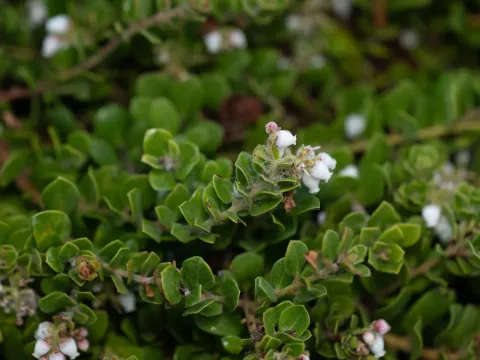
Little Sur manzanita
Arctostaphylos edmundsii
Little Sur manzanita (Arctostaphylos edmundsii) is a member of the Ericaceae family. This low-growing, prostrate evergreen shrub is native to the coastal bluffs of Central California, where it thrives in exposed, rocky terrain.
What the section contains
Little Sur manzanita
The plant requires well-drained, porous soils to maintain root health. Heavy clay soils or areas with poor water percolation are unsuitable, as the root system is highly susceptible to rot when exposed to stagnant moisture.
This species prefers full sun exposure to maintain its characteristic compact and dense growth habit. While it can tolerate partial shade, insufficient light often results in leggy branches and reduced flowering frequency.
As a drought-tolerant plant, it is an excellent choice for xeriscaping projects. Once established, it requires minimal supplemental irrigation, relying on natural precipitation to sustain its metabolic processes.
In landscaping, it is utilized as an effective groundcover to stabilize slopes and suppress unwanted vegetation. Its dense foliage provides year-round visual interest and supports local biodiversity in suitable climates.
The primary concern for this plant is the occurrence of fungal root rot pathogens, specifically Phytophthora species. These thrive in waterlogged environments and are often the leading cause of plant loss in managed gardens.
Aphids and scale insects can occasionally infest the growing tips during the spring flush. Monitoring is essential, and physical removal or targeted treatments can be employed if the population threshold is exceeded.
High humidity combined with poor air circulation can lead to foliar fungal issues. Ensuring proper spacing between individual plants is a critical preventive measure in the overall nursery and landscape maintenance strategy.
Avoid excessive mulch application directly against the main stem, as this creates a moist environment that encourages bark decay and pathogen entry points. Use inorganic mulch such as gravel or crushed rock instead.
Pruning should be limited to the removal of dead or crossing branches to prevent unnecessary stress. Avoid heavy shearing, as manzanitas generally do not respond well to drastic reduction of their vegetative mass.