
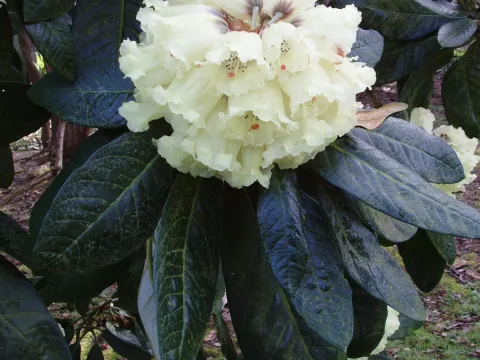
Macabe rhododendron
Rhododendron macabeanum
The Macabe rhododendron (Rhododendron macabeanum) is a majestic evergreen shrub or small tree belonging to the Ericaceae family. It is renowned for its large, leathery, elliptic leaves and impressive, dense trusses of bell-shaped flowers that bloom in early spring.
What the section contains
Macabe rhododendron
Native to the high-altitude forests of Manipur in northeast India, this species thrives in cool, moist, and stable environments. These origins dictate its specific ecological needs, making it a specialized plant for collectors and temperate garden settings.
Successful cultivation requires acidic, humus-rich, and well-drained soil. The root system is relatively shallow, which makes it highly sensitive to drought and physical disturbance. Frequent mulching is essential to keep the roots cool and moist while maintaining the required acidity.
The plant demands a sheltered location with partial shade to protect its foliage from intense midday sun and desiccating winds. Exposure to direct sunlight often results in scorched leaves and reduced flowering, compromising the plant's overall health.
In garden applications, this rhododendron serves as a dramatic focal point. Its substantial size and architectural beauty make it ideal for woodland gardens where the microclimate can be strictly managed to mimic its natural mountain habitat.
The primary threats include fungal diseases such as Phytophthora root rot, which is triggered by waterlogged conditions and poor drainage. Prevention is focused on site selection and ensuring that the planting medium remains aerated yet moist.
Pests such as rhododendron bugs and spider mites are common concerns. They typically attack the foliage, leading to mottling or yellowing. Regular monitoring and the application of appropriate systemic treatments are necessary to maintain the plant's aesthetic quality.