
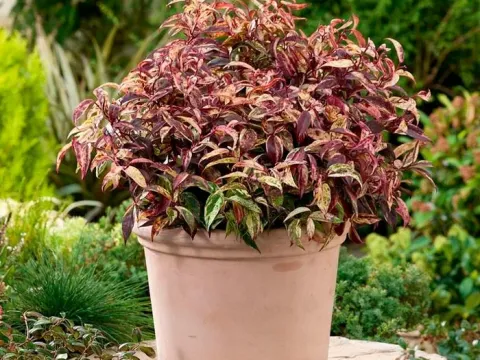
Leucothoe
Leucothoe
Leucothoe is a genus of evergreen shrubs belonging to the Ericaceae family. Originating from North America and East Asia, these plants are well-adapted to woodland environments, often found thriving in cool, damp shaded areas.
What the section contains
 Leucothoe davisiae
Leucothoe davisiae
Leucothoe davisiae
 Leucothoe grayana
Leucothoe griffithiana
Leucothoe griffithiana
Leucothoe grayana
Leucothoe grayana
Leucothoe griffithiana
Leucothoe griffithiana
 Leucothoe hybrids
Leucothoe hybrids
Leucothoe hybrids
 Leucothoe populifolia
Leucothoe populifolia
Leucothoe populifolia
 Leucothoe racemosa
Leucothoe racemosa
Leucothoe racemosa
 Leucothoe recurva
Walter's Doghobble
Leucothoe walteri
Leucothoe recurva
Leucothoe recurva
Walter's Doghobble
Leucothoe walteri
Leucothoe
To cultivate Leucothoe successfully, it is essential to provide acidic, well-draining soil rich in organic matter. They are calcifuge plants, meaning they do not tolerate alkaline conditions, which can lead to iron chlorosis.
Climate requirements include protection from harsh winds and intense afternoon sun. They prefer partial to full shade, especially in warmer zones, to prevent leaf scorching and to maintain the humidity they require for vigorous growth.
Botanically, they are recognized for their arching stems and attractive, lance-shaped leaves. Many popular varieties, such as those of Leucothoe fontanesiana, feature striking seasonal color changes, turning from green to deep bronze or red in autumn.
Cultural practices should emphasize consistent soil moisture throughout the growing season. Applying a thick layer of organic mulch, such as pine needles or peat, is beneficial to regulate soil temperature and maintain acidity.
The primary threats to Leucothoe are fungal diseases, particularly leaf spots caused by pathogens like Phyllosticta. These are most prevalent in environments with high humidity and poor air circulation around the foliage.
Root rot is a significant concern if the planting site does not have adequate drainage. Stagnant water around the root system will quickly lead to decay, making proper site selection and soil amendment critical.
Spider mites represent the most common pest issue, especially during hot and dry spells. These pests can cause significant damage to the foliage, resulting in a stippled appearance and premature leaf drop.
Aphids can also occasionally infest the young, tender growth of the shrub. While generally less severe, these infestations can stunt development if left unmanaged during the peak spring growth phase.
Preventive care involves proper spacing and regular sanitation, such as removing dead or diseased wood. Keeping the foliage dry by avoiding overhead irrigation helps to mitigate the risk of fungal infections.