
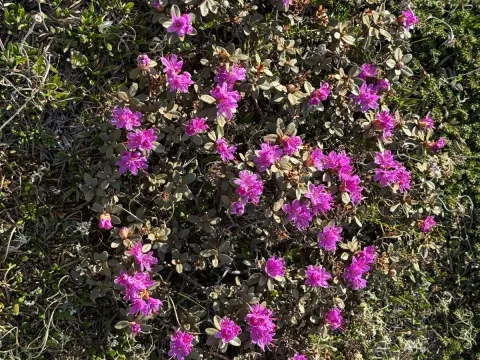
Lapland rosebay
Rhododendron lapponicum
Lapland rosebay (Rhododendron lapponicum) is a small, prostrate shrub belonging to the Ericaceae family. It is native to the arctic and alpine regions of the Northern Hemisphere, where it thrives in harsh environments characterized by low temperatures and nutrient-poor soils.
What the section contains
Lapland rosebay
Botanically, this species is noted for its diminutive size, rarely exceeding 30 centimeters in height. Its small, leathery leaves are densely covered with resinous scales, which provide protection against desiccation and intense winds in its native tundra habitat.
To cultivate this species, growers must provide acidic, well-draining soil rich in organic matter, such as peat moss. It is highly intolerant of waterlogged conditions, which frequently cause root rot, making excellent drainage an absolute requirement for successful long-term establishment.
The cultural requirements center on maintaining a cool, humid atmosphere with ample indirect light. Exposure to intense mid-day sun in temperate climates often results in severe leaf scorch, highlighting the necessity for a site with dappled shade or protection during peak heat hours.
Maintenance tasks include the application of acidic mulch to stabilize root temperatures and retain moisture levels. Careful irrigation with non-alkaline water is critical, as any trace of lime or excess minerals will quickly inhibit the health and vigor of this calcifuge plant.
The primary threats to Rhododendron lapponicum include fungal pathogens such as Phytophthora, which flourish in poorly aerated or overly damp soil. Prevention relies on avoiding overwatering and ensuring that the planting medium is consistently porous and acidic.
Pests such as rhododendron lace bugs and spider mites can cause significant damage to the foliage, especially in dry environments. Regular inspection and the application of appropriate systemic insecticides or horticultural oils are recommended to maintain the plant's structural integrity.