
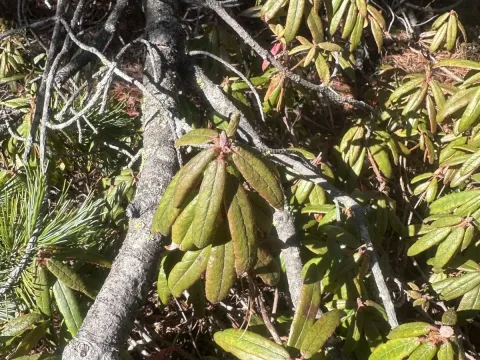
Labrador tea
Ledum macrophyllum
Ledum macrophyllum is a member of the Ericaceae family, known for its evergreen foliage and medicinal properties. This shrub is characterized by its large, leathery leaves and a strong, resinous scent, which is a signature trait of the Ledum genus.
What the section contains
Labrador tea
The crop originates from cool, humid regions and thrives in acidic, peat-based soils. In an agricultural setting, it is essential to replicate these conditions by providing well-drained but consistently moist substrates with a low pH value.
The plant prefers partial shade and is highly cold-hardy. Proper spacing is necessary to ensure adequate air movement, which prevents the build-up of excess humidity that can lead to root rot or fungal development within the dense canopy.
Maintenance involves regular mulching with pine needles or acidic bark to regulate soil temperature and retain moisture. Since the root system is shallow, mechanical cultivation should be avoided to prevent damaging the sensitive feeder roots.
Economically, the plant is primarily cultivated for the pharmaceutical industry. The leaves contain significant amounts of essential oils and terpenes, which are extracted for their therapeutic effects in traditional and modern medicine.
Fungal pathogens such as rust and various leaf spot diseases are the primary threats to crop health. These diseases typically manifest during periods of prolonged rainfall or when planting density is too high, creating a stagnant microclimate.
Insect pests, including spider mites and aphids, pose a significant risk, especially in drier environments or under glasshouse cultivation. These pests feed on the sap of young shoots, causing stunted growth and leaf deformation.
Integrated pest management strategies are crucial for this crop. Regular inspection of the undersides of the leaves allows for the early detection of pest populations, enabling targeted interventions before widespread damage occurs.
Maintaining optimal soil health is the best defense against soil-borne pathogens. Avoid over-fertilization, as high nutrient levels can cause rapid, succulent growth that is more susceptible to both insect attacks and fungal infections.
Effective weed control is essential but must be handled carefully. Manual weeding is the preferred method to protect the plant's delicate root structure, ensuring that the crop receives sufficient nutrients and light without competition.