
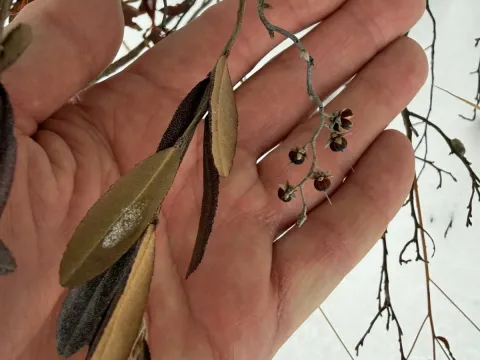
Leatherleaf
Chamaedaphne calyculata
Leatherleaf (Chamaedaphne calyculata) is an evergreen shrub belonging to the Ericaceae family. It is a low-growing perennial species often referred to in botany as the only member of its monotypic genus, characterizing bog-dwelling shrubs.
What the section contains
Leatherleaf
The plant originates from the cold and temperate zones of the Northern Hemisphere. Its natural habitat is primarily composed of peatlands, bogs, and wet forests, where it forms dense, leathery-leafed colonies adapted to high moisture levels.
For successful cultivation, leatherleaf requires highly acidic soil with a pH ranging from 3.5 to 4.5. It thrives in well-drained but consistently moist organic media, making it an excellent choice for specialized rock or water gardens.
The agrotechnical management of this plant focuses on maintaining soil acidity and high levels of atmospheric humidity. It is highly cold-hardy, capable of surviving severe winter temperatures typical of its native northern distribution range.
Its primary commercial use is in ornamental horticulture, specifically for ericaceous garden collections. While it is rarely grown as a conventional agricultural crop, it is valued for its winter-persistent foliage and bell-shaped spring flowers.
The most significant threats to leatherleaf are root pathogens that flourish when soil pH levels drift toward neutral or alkaline values. Improper irrigation with non-acidic water can quickly lead to chlorosis and plant decline.
Common pests include aphids and mites, which can cause leaf deformation during the active growing season. Preventive measures include ensuring proper air circulation around the canopy and monitoring for early signs of infestations.