
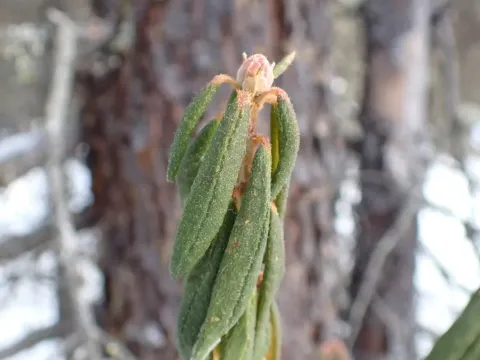
Labrador tea
Ledum groenlandicum
Labrador tea (Ledum groenlandicum) is an evergreen shrub belonging to the Ericaceae family. It is native to the northern regions of North America, where it thrives in cool, acidic, and moisture-rich environments like bogs and coniferous forests.
What the section contains
Labrador tea
The successful cultivation of this crop depends on soil acidity; the ideal pH level ranges from 3.5 to 5.0. If the soil is not acidic enough, the plant fails to absorb nutrients and will eventually perish due to physiological stress.
Climate requirements include protection from direct, scorching sunlight. Labrador tea performs best in semi-shaded conditions where the root system remains cool and consistently damp throughout the growing season.
Agricultural maintenance involves applying a thick layer of mulch, such as peat moss or pine needles, to mimic the natural forest floor and retain soil moisture while preventing rapid temperature fluctuations.
The plant is highly valued for its medicinal properties and aromatic leaves, which are used to produce traditional herbal infusions known as Labrador tea, as well as essential oils for the fragrance industry.
Root rot is the most significant threat to Labrador tea plantations, primarily caused by poor drainage or waterlogged soil conditions that prevent root aeration.
Fungal leaf spots can occur when air circulation is limited. Ensuring adequate spacing between plants is a critical agronomic practice to mitigate the risk of spreading pathogens in dense clusters.
Pests such as spider mites may infest the foliage during hot and dry spells, leading to yellowing and premature leaf drop, which significantly reduces the quality of the harvested biomass.
Environmental stress, particularly sudden exposure to high temperatures without adequate soil moisture, makes the plants susceptible to secondary infections and opportunistic pests.
Integrated pest management should focus on cultural controls, such as maintaining optimal soil acidity and moisture levels, to bolster the natural resistance of the shrubs against common stressors.