
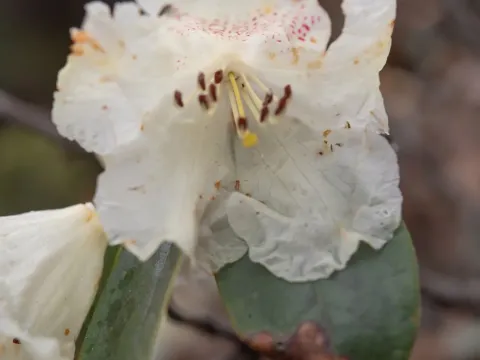
Rhododendron lanatum
Rhododendron lanatum
Rhododendron lanatum is a member of the Ericaceae family, widely recognized for its distinctive woolly indumentum covering the young shoots and the undersides of its leaves. It is a slow-growing evergreen shrub that brings high ornamental value to gardens requiring specialized acid-loving plants.
What the section contains
Rhododendron lanatum
Native to the high-altitude regions of the Eastern Himalayas, specifically India, Bhutan, and Tibet, this species thrives in cool, moist, and misty climates. These native conditions dictate the necessity for stable environmental controls when attempting cultivation in artificial landscapes.
The plant requires acidic, well-draining soil with a pH level between 4.5 and 5.5. A mixture of peat moss, pine bark, and coarse sand is ideal to mimic the natural forest floor habitat and prevent root suffocation, which is a common cause of failure in heavier soil types.
Light requirements are strict: the shrub prefers partial shade or dappled light. Intense direct sunlight can lead to leaf scorching, while deep shade inhibits flower bud formation. Adequate shelter from cold, drying winds is also essential to maintain the health of the foliage throughout the year.
Watering management is a critical component of the crop's husbandry. Only soft water, such as collected rainwater, should be used for irrigation. Keeping the roots consistently moist but not waterlogged is key to supporting this plant's delicate symbiotic relationship with mycorrhizal fungi.
The primary pathological threats include phytophthora root rot and fungal leaf spot diseases. These are frequently induced by poor soil drainage and high humidity levels combined with poor air circulation, necessitating prompt removal of infected plant parts and improved site sanitation.
Pest pressures primarily involve the rhododendron leafhopper and scale insects. These organisms can weaken the plant by feeding on sap and excreting honeydew, which leads to sooty mold accumulation. Integrated pest management, including systemic insecticides, is recommended for effective control.