
Rhododendron keysei
Rhododendron keysei
Description
Growing requirements
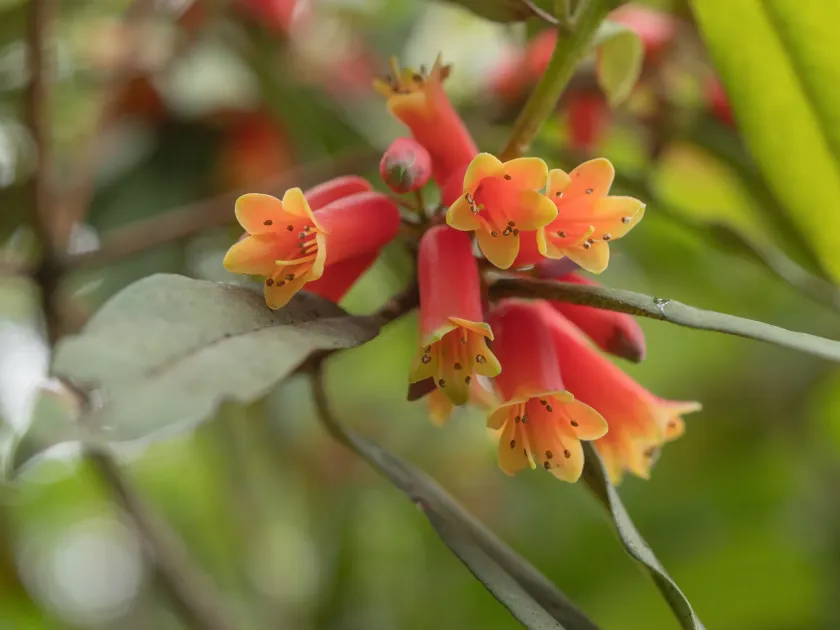
Rhododendron keysei is a rare and distinct evergreen shrub belonging to the Ericaceae family. Native to the high-altitude regions of Bhutan and Northeast India, this species is prized by collectors for its unusual, tubular, bell-shaped flowers.
The plant exhibits a slow to moderate growth habit, forming dense, dark green foliage that serves as an excellent backdrop for its vibrant, multicoloured blooms. Its botanical architecture is uniquely adapted to mountainous terrain, requiring specific light conditions.
Optimal growth is achieved in well-draining, acidic soil rich in organic matter. Gardeners should ensure the growing medium includes components such as peat moss, pine bark, and coarse sand to mimic the natural forest floor habitat of the species.
Climatic requirements focus on cool, humid conditions with protection from harsh midday sun. Rhododendron keysei thrives in dappled shade, which prevents the foliage from scorching and maintains the delicate moisture balance required for the roots.
Maintenance involves diligent mulching to stabilize soil temperature and acidity. It is vital to avoid disturbing the shallow root system, as this plant is highly sensitive to compaction and mechanical damage from gardening tools.
Main diseases and pests
Phytophthora root rot is the most serious threat to this species, typically triggered by waterlogged soil. Ensuring perfect drainage is the most effective cultural practice to prevent this devastating fungal disease from destroying the root system.
Leaf spots caused by various fungi can occur during periods of prolonged wet weather. To mitigate this risk, it is recommended to water at the base of the plant, keeping the foliage as dry as possible, and ensuring good air circulation around the shrub.
Rhododendron bugs are common pests that feed on the underside of the leaves, leading to mottled appearance and reduced photosynthetic capacity. Early detection and treatment with insecticidal soap are recommended to manage these populations effectively.
Spider mites can become problematic during hot and dry spells. These pests cause significant yellowing of the foliage, which can be managed by increasing local humidity and applying targeted miticides when necessary.
Nutrient deficiency, specifically iron chlorosis, may occur if the soil pH rises above the ideal acidic range. Regular testing of the soil and the use of acid-loving plant fertilizers are essential to ensure deep green, healthy leaf development.