
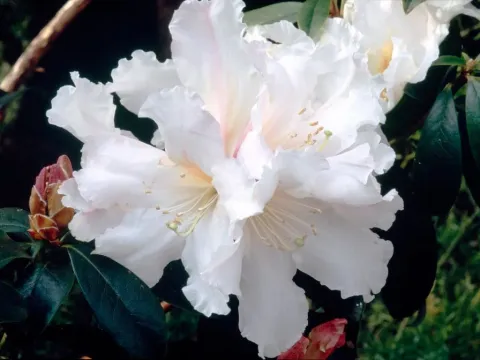
Rhododendron lindleyi
Rhododendron lindleyi
Rhododendron lindleyi is a stunning evergreen shrub belonging to the Ericaceae family. Native to the high-altitude forests of the Himalayas, this species is highly valued by collectors for its large, fragrant, white to cream-colored trumpet-shaped flowers.
What the section contains
Rhododendron lindleyi
The plant typically grows as an epiphyte or lithophyte in its natural habitat. It requires a specific microclimate that mimics forest mountain conditions: cool temperatures, high humidity, and protection from intense direct sunlight and drying winds.
In terms of soil, it demands an acidic substrate with a pH level between 4.5 and 5.5. The potting mix or garden soil should be extremely well-draining, loose, and rich in organic matter such as pine bark, peat moss, or leaf mold to ensure optimal root health.
Watering is a critical aspect of its cultivation. The soil must remain consistently moist but never waterlogged. Using rainwater or softened water is highly recommended to maintain the low soil pH, as hard tap water can be detrimental to the plant over time.
Temperature management is key to success. This species is not fully hardy in cold climates and requires protection during winter months. It thrives in locations with dappled shade, where light is filtered through the canopy of larger trees.
Root rot is the most common threat, primarily caused by improper drainage or overwatering. Maintaining a porous, well-aerated soil structure is the best preventive measure against various fungal infections that attack the root system.
Pests like spider mites and rhododendron bugs can significantly damage the foliage. They suck sap from the leaves, causing chlorosis, spotting, and eventual leaf drop, which weakens the plant's overall vigor.
Powdery mildew can appear during humid summer days with poor air circulation. Regular monitoring and thinning out the inner branches to improve airflow are effective cultural practices to mitigate the risk of fungal spread.
Insects should be managed using targeted insecticides or neem oil treatments applied in the early stages of infestation. Preventive spraying in late spring can help maintain a healthy plant canopy throughout the growing season.
Good garden hygiene, such as promptly removing dead foliage and maintaining clean growing areas, helps minimize the accumulation of pathogens and creates a more resilient environment for the plant.