
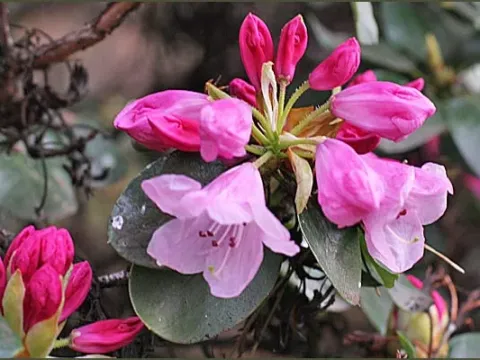
Rhododendron jucundum
Rhododendron jucundum
Rhododendron jucundum belongs to the Ericaceae family and is an evergreen shrub species native to the high-altitude forests of China. It is valued for its unique growth habit and elegant appearance, often used as a flagship species in collector gardens.
What the section contains
Rhododendron jucundum
To cultivate this species successfully, one must provide acidic soil conditions with a pH level ranging from 4.5 to 5.5. A mix of peat moss, pine bark, and coarse sand is ideal to ensure both the required acidity and proper aeration for the delicate root system.
The plant thrives in semi-shaded environments, avoiding the direct exposure to harsh afternoon sunlight. It is best placed in positions that offer dappled shade throughout the day, mimicking the conditions of its native mountain habitat.
Moisture management is critical; while the soil must remain consistently damp, it should never become waterlogged. A deep layer of organic mulch, such as leaf mold or pine needles, is essential to maintain root coolness and preserve soil humidity.
Regarding fertilizer, it is vital to apply only those formulated specifically for acid-loving plants. Slow-release, low-nitrogen fertilizers are preferred to prevent excessive vegetative growth that can make the shrub more susceptible to cold damage.
Root rot, primarily caused by Phytophthora species, is the most severe threat to Rhododendron jucundum. It often results from poor drainage or overwatering, which creates an anaerobic environment unfavorable for the plant's health.
Leaf spot diseases, caused by various fungal pathogens, can lead to premature defoliation. Keeping the foliage dry by avoiding overhead irrigation and ensuring good air circulation is a primary preventative measure against these infections.
Pests such as rhododendron borers and vine weevils can significantly damage the wood and roots of the plant. Monitoring for signs of larval feeding, such as notched leaf edges or sawdust-like frass at the base of the stem, is necessary for early intervention.
Aphids and lace bugs are common pests that feed on the undersides of leaves, resulting in yellowing and stunted growth. If infestations occur, systemic insecticides are effective for controlling the population before it spreads.
Maintaining high plant vigor through proper site selection and annual mulching is the most effective way to improve the plant's natural resistance to both insects and fungal pathogens throughout its lifecycle.