
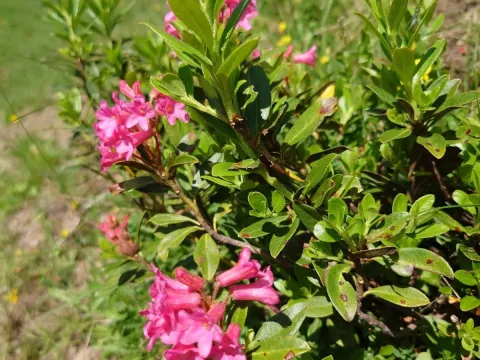
Rhododendron intermedium
Rhododendron intermedium
Rhododendron intermedium is a natural hybrid shrub belonging to the Ericaceae family. It is recognized for its botanical significance, being a cross between Rhododendron ferrugineum and Rhododendron hirsutum, adapted to alpine conditions.
What the section contains
Rhododendron intermedium
This species thrives in temperate climates with high atmospheric humidity. It is considered a hardy shrub that requires careful selection of site location to ensure protection from harsh winds and intense direct sunlight.
The primary cultivation requirement is an acidic, well-draining soil structure. A mix of peat, pine bark, and coarse sand provides the necessary aeration and moisture-retention properties required for healthy growth.
Maintenance involves keeping the root zone cool, which is best achieved through a thick layer of organic mulch. Mulching prevents soil compaction and regulates the temperature around the shallow root system.
Fertilization should be handled with care, using specialized fertilizers for ericaceous plants. Over-fertilization can lead to root burn, so application rates should be kept moderate and consistent throughout the growing season.
Phytophthora root rot is one of the most severe threats to this plant. It is primarily triggered by waterlogged soil, emphasizing the need for excellent drainage systems in the planting area.
Common pests such as lace bugs and spider mites frequently infest the foliage. These pests thrive in dry and hot conditions, making irrigation management a key preventive measure for garden health.
Powdery mildew may occur if air circulation is insufficient. Pruning for spacing and thinning dense branches can significantly reduce the risk of fungal spread throughout the shrubbery.
Regular inspection of the foliage is essential to detect early signs of chlorosis, which may indicate issues with soil pH or nutrient deficiencies rather than a pest infestation.
Integrated pest management strategies are recommended, combining chemical treatments with cultural practices like removing infected plant debris to maintain the long-term vitality of the rhododendron.