
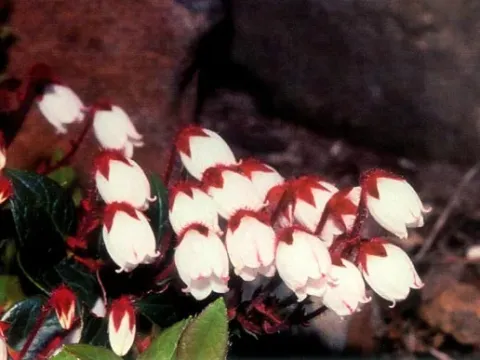
Phyllothamnus
Phyllothamnus
Phyllothamnus is a monotypic genus of evergreen shrubs belonging to the Ericaceae family. Known for its aesthetic appeal and compact growth habit, it is considered a specialized plant for enthusiasts of alpine and woodland gardens.
What the section contains

Phyllothamnus
The plant originates from the mountainous regions of North America, where it thrives in cool, moist, and acidic environmental conditions. Its evolutionary history has made it well-adapted to high-altitude landscapes with rocky, well-draining soil structures.
Cultivation requirements prioritize a highly acidic growing medium, typically composed of peat moss, pine bark, and coarse sand. Ensuring a pH level between 4.5 and 5.5 is essential for the healthy absorption of nutrients through its delicate root system.
Regarding climate, Phyllothamnus prefers cool summers and protection from intense, direct solar radiation. Partial shade is optimal, as it mimics the light conditions found at the edges of coniferous forests, where the plant naturally resides.
Agricultural management requires careful attention to irrigation. Using soft, lime-free water is mandatory, as calcium accumulation can prove toxic to the plant. Consistent moisture is necessary, but the soil must never be waterlogged, necessitating excellent drainage.
The primary threats to Phyllothamnus are fungal pathogens, specifically those causing root rot and damping off. These issues are almost exclusively associated with poor drainage and excessive moisture accumulation around the base of the plant.
Insect pests, including spider mites and mealybugs, are common during periods of low humidity or high temperatures. These pests weaken the plant by feeding on the sap of new foliage, leading to chlorosis and stunted growth.
Disease management involves strict sanitation, such as removing any decaying foliage and ensuring adequate air circulation. Fungicidal applications may be necessary if early signs of infection are detected in the root zone.
Winter protection is crucial, particularly in colder climates, to prevent desiccation. Providing a protective layer of organic mulch helps maintain consistent soil temperatures and protects the shallow roots from drastic frost cycles.
While not a commercial field crop, Phyllothamnus serves as a significant botanical asset in nursery production and landscape design, specifically within curated environments that support specialized acid-loving plant collections.