
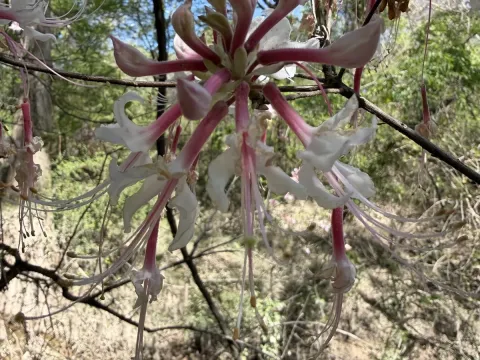
Piedmont azalea
Rhododendron canescens
Piedmont azalea (Rhododendron canescens) is a deciduous flowering shrub belonging to the Ericaceae family. Native to the southeastern United States, it thrives in woodland environments and moist soil conditions.
What the section contains
Piedmont azalea
This species is highly specific regarding soil chemistry. It requires acidic, well-draining soil with a pH ranging from 4.5 to 5.5 to maintain proper nutrient uptake and prevent physiological chlorosis.
Placement is crucial for the health of the plant. It performs best in filtered sunlight or partial shade, protected from intense afternoon heat, which can cause leaf scorch and drought stress.
Consistent soil moisture is essential for this azalea. Applying a layer of organic mulch, such as pine needles or peat moss, helps conserve moisture and keeps the shallow root system cool during summer.
Cultural practices should include annual feeding with fertilizers specifically formulated for acid-loving plants. It is important to avoid over-fertilization, as high nitrogen levels can encourage excessive foliage at the expense of floral development.
Fungal pathogens are the most common cause of failure in azalea cultivation. Root rot, typically caused by Phytophthora species, occurs in poorly drained soils where water remains stagnant around the crown.
Leaf blight and various types of fungal spots can affect the foliage during periods of high humidity. Improving airflow around the plant through judicious pruning can significantly mitigate these risks.
Lace bugs are the most frequent insect pest for Rhododendron canescens. These insects feed on the undersides of leaves, causing a characteristic stippled or yellowed appearance that reduces the plant's aesthetic value.
Integrated pest management suggests starting with horticultural oils or insecticidal soaps for early detection of lace bugs. Severe infestations may require the application of systemic pesticides applied to the soil.
Regular monitoring of the plant is vital. Early identification of stress signs, such as wilting or discoloration, allows for prompt corrective action before the damage becomes irreversible or affects the entire shrub.